Country Music aficionados will tell you that it was right about the time Curb Records started a Music Business School in Nashville when things just went to hell. Similar programs soon sprung up at major universities across the US, effectively making Frat Boys the majority tastemakers in the music biz. Waylon Jennings himself noted, “these so-called seats of learning cranked out 1,000 degrees for every decent Country tune that’s been written in the last 25 years.” And anyone who’s heard a Hank Williams song might be inclined to agree. Not to mention anyone who listens to Merle Haggard or Willie Nelson or Loretta Lynn, or any number of songwriting masters who lived the songs they wrote, delineating a life in lust with living and heartbreak, and cuttin’ loose all of a Saturday night. Our cynical Old-Timey friends argue that what people call Country Music today is an embarrassment, that the Hot Country Charts are full of garbage, quoting from classic hits all the while growing further distant from the magic that made the originals great.
Charlottesville, Virginia-born Ralph Lee Gimmel was one who knew all this only too well: steeped in Outlaw Country, his alcoholic and abusive father audibly groused about the wicked influence of Nashville ‘countrypolitans’ all the time. No stranger to boozy flights of fancy and wild claims, Ralph Sr. regularly boasted that a young David Allan Coe was his biological father. Ralph Sr. took to saying that since Coe has never returned his calls to explicitly say that Gimmel wasn’t his son, his paternity was almost as good as Gospel.*
But what concerns us here, is how Ralph Lee Gimmel went from street performer to Americana Music Association’s Best Emerging Artist (and where else could you ’emerge’ at the ripe old age of 31?) to the bar-brawling wild-man who pulled a gun in a parking lot, ending up doing five years for domestic abuse and possession of a controlled substance? And all in the space of 2 years?
Nobody will ever truly understand the why or how, but his songs remain to tell the who, the what, the where and the when. That is, they remain in physical copies on vinyl and CD only. There are no traces of Gimmel’s music on Spotify or any digital distribution network. Axton Records and RED Worldwide removed the album from all digital distribution when it was discovered that their charge had been in a physically abusive relationship with his spouse of 17 years, and that the disturbing songs he was singing were the literal truth, and not just the gussied-up fictions of an outlaw poet.
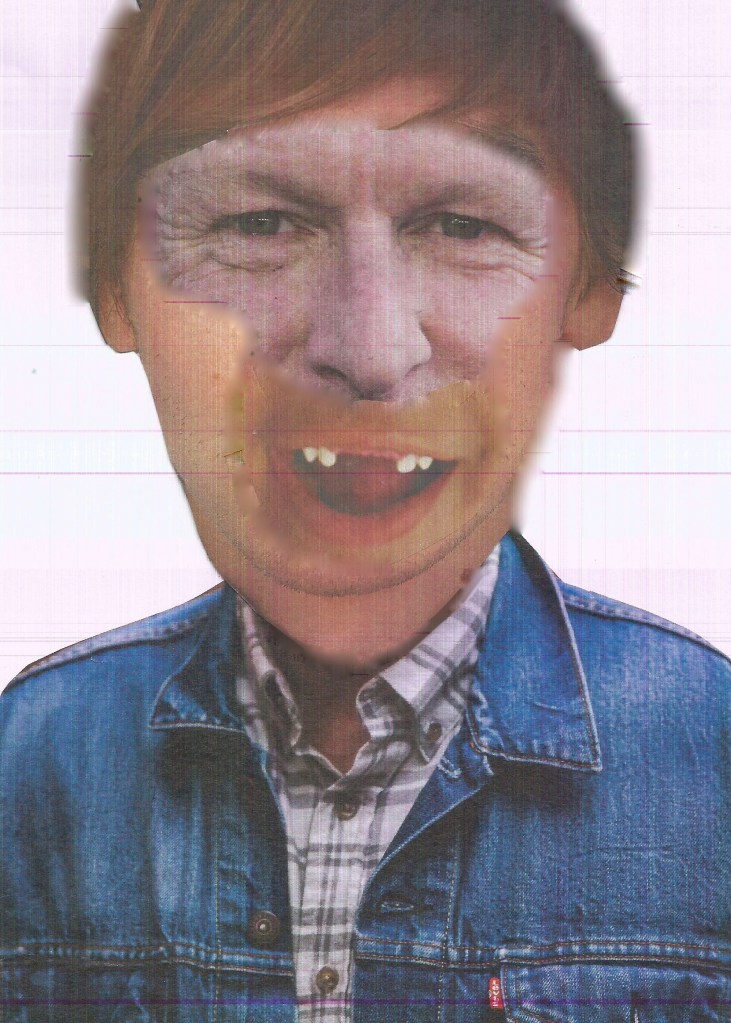
Gimmel, whose high tenor was augmented by a distinctive sibilance occasioned by having his front teeth punched out in a fight during his senior year in high school, managed to get his controversial opinions quoted on a variety of subjects other than the pathetic state of Country music (e.g. the role of women in society, drugs, immigration, the 2nd Amendment, climate change, etc.) in his few years in front of a microphone. One of Gimmel’s theories about his approach to Country Music also became a verse in his first Americana #1 song, “Feel Good Movie,” wherein Gimmel cleverly turned all the negatives of the protagonist into the positives of a Summer Blockbuster film:
A D.U.I. don’t make me an outlaw,
Like swimming don’t make me a duck.
I don’t get off paying court costs,
To my lawyer who’s a lazy river in a feel good movie.
Another move that endeared him to the local musicians’ community, but alienated him from the major labels, was hiring C and D-list musicians as the band on his album. These perfectly talented pickers couldn’t believe they were hired to play authentic country music. It was a righteous, working man’s move. “How’s a player going to get off the bottom rung unless he gets a session on an actual record instead of cutting demo after demo for some bullshit factory on Music Row?” Gimmel replied to a journalist who asked him why he didn’t use the best guys in town for his session. You could hear the band calling out cues and moves in the background. They didn’t whitewash the life and love out of the music.
Oklahoma oilman William ‘Slick Willie’ Beresford, who decided he was going to get into the music business rather than give all his money to the I.R.S, financed the entire album. He saw Gimmel play one song at an AMA Day party and within 2 years of coming to Nashville, by hiring the right publicists and project managers and a horde of blood-thirsty college graduate interns anxious to sink their teeth into something even remotely real, Beresford and Gimmel defied all the received wisdom about Music City being a ‘Five Year Town’ for success.
The darkness begins to creep into our story when the album, which critics agreed was lyrically outrageous, musically sharp, and not auto-tuned to the point of being robot music, started to get the kudos it deserved. Having earned the attention of national touring acts who were starving for anything genuine-sounding to help warm up their crowds rather than the latest hat with a guitar who never wrote a damn song in his life, Gimmel had to get serious about hitting the road. He had no children, but he did have a wife that nobody seemed to know anything about. One afternoon, when Jamey Robinson, a staff photographer for The Madisonian, a Madison, TN arts magazine, came over to visit the house for some “down-home porch shots,” Gimmel’s wife, Nora, surreptitiously passed the lensman a folded-up note that read only, “He’s a monster. Help me.” Robinson was nonplussed at first, but eventually Nora’s plea made its way to the proper authorities. Rumors started spreading.
It all came to a head the following Monday night at Dee’s Country Cocktail Lounge when Gimmel, who was supposed to sit in with the Bluegrass session that night, was called out in the parking lot for being a “goddam wife beater,” and he responded by brandishing a loaded .45 revolver, which quickly got the police called in. Shortly, they discovered an unusually large amount of weapons and Crystal Meth in the bed of Gimmel’s Silverado.
Today, Ralph Lee Gimmel is serving out his sentence at Brushy Hill while his wife, having moved back to Charlottesville, collects all the royalties earned from his one album–named with bitter irony–My Perfect Life. It was the first album by an emerging Americana artist to sell more than 14,000 physical copies.
*During hotel room one-night-stands, quickie fumbles in the back of tour buses, and stage door alleyway knee-tremblers, D.A.C. was well-known to have sired many a baby while on the road, so who really knows?

 Americana Unsung