Categories
Comedy Novelty Act Solo Singer-Songwriters

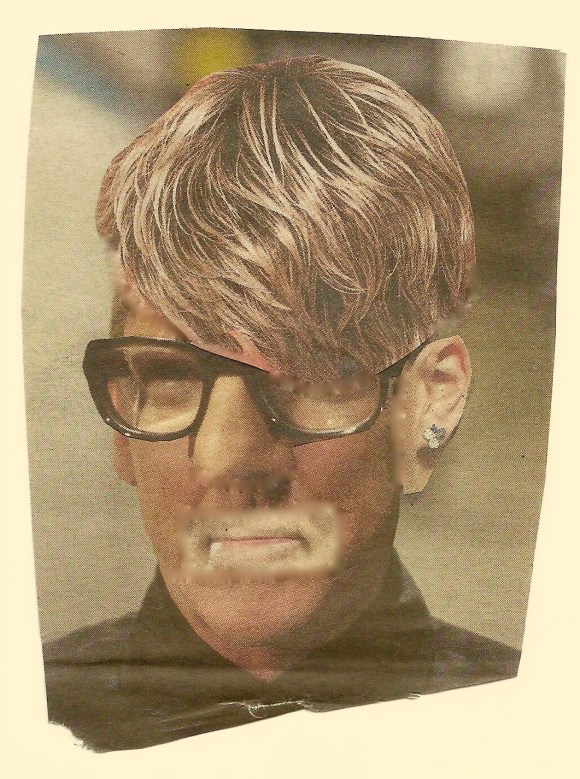
Boner Jack

Bruce Jackson
aka “Boner Jack” aka “Dolly Hardon”
b. Cincinnati, Ohio 1943

There existed back in the 60s, 70s, and 80s an underground music scene as lively, wilful, and independent as Stiff, SST, and Sub-Pop combined. This scene was made up of the pro- and semi-pro musicians who played a circuit of private members-only bars operated by fraternal and veterans’ organizations such as the Fraternal Order of Eagle, Loyal Order of The Moose, VFW, American Legion, etc. in the Midwestern and Southern United States. These venues fulfilled an important social function, allowing men a safe space to behave in ways which were growing ever less socially acceptable; business was conducted, off-color jokes were swapped, money was lost quasi-legally gambling, and, as concerns us here, country music singers were cheered.

Among these performers was the notorious Boner Jack, who, in the early 60s, was known as Bruce Jackson, a classic country singer in the Hank Williams mold.

Movie-star good-looking with the slick hair of Sal Mineo, the perfect teeth of Tab Hunter, and the strong jaw line of Rock Hudson, Jackson was regularly seen in the company of gorgeous women during his first flush of (semi) success in the 1960s. Nonetheless, he remained a confirmed bachelor until long after his show business career was over. Indeed, as quiet and retiring off stage as he was flamboyant on stage, Jackson’s personal life was a closed book to all but the series of young, handsome personal roadies who always accompanied him on tour.

Jackson was perhaps best known for his flashy stage appearance, replete with a pink pearl snap shirt with white fringes, diamel-encrusted 10-gallon hat, and a gaudy gold-plated belt buckle big enough to poke a bear’s eye out. He released several well-received singles on Wheeling, West Virginia’s Turn-Pike Records, starting with “Sweet Harvest Moon” and “Runnin’ (With the Devil)”. The others followed suit with plenty of regional airplay, but no traction anywhere other than the tri-state area.

All he needed was a break.

An appearance on The Tonight Show Starring Johnny Carson in 1968 should have been just that break. But apart from striking up a friendship, based on shared experience, with fellow Ohio-native Paul Lynde backstage at NBC Studios, Jackson came away with precious little from his Burbank adventure. While the broadcast gave a bump to his then-current Lp, Tomcattin‘, it was nothing like enough to sustain a career; while the single he was promoting, “Gorgeous Eyes”, struggled to make 113 in the Country Music charts, let alone a showing in the American Top 40. Soon, people stopped returning his calls.

And thus by 1975, age just 32, Jackson’s singing career was all but over; not so much a ‘has-been’ as a ‘never really was’. Eighth on the bill in a regional touring Hee-Haw-style variety show called Corn Pone, he began to resent the very songs he’d recorded over the previous decade which had so signally failed to break him nationally. One drunken night in the middle of the tour, in a perverse act of revenge heedless to the sensibilities of what remained of his fan base, Jackson re-cast his entire back-catalogue with smutty lyrics assured to offend anyone in earshot: “Gorgeous Eyes” became “Gorgeous Ass”, “Runnin’ (With the Devil)” became “Fuckin’ (With the Devil)”, etc., etc. He debuted the new versions the following evening at the Memorial Theatre in Mount Vernon, Ohio. The audience gasped open-mouthed as Jackson snarled one sexually explicit, profanity-laden song after another. As he begun to sing his final song, “Sweet Harvest Poon”, the revue’s panic-stricken director cut power to the stage as a chorus of disgusted boos reigned down from the hall. It was as twisted a musical self-sabotage as anything this side of Metal Machine Music. Sure enough, Jackson was fired as he walked off the Corn Pone stage. He was replaced by a Ken Berry look-a-like comedy monologist.

But in one of those strange twists of showbiz fate, Bobby Sirica was in the audience that night. A booking agent who dealt exclusively with fraternal organizations in the American South and Midwest, Jackson’s puerile re-writes had him in stitches and gave him a flash of inspiration. Immediately after Jackson was dropped, Sirica strode up and told Jackson he could guarantee him five nights a week performing his ‘blue’ act at his clubs in states as far west as Illinois, as far east a Pennsylvania, as far north as Michigan, and as far south as Tennessee. With no other options on the horizon, Jackson summarily ditched the straight Country Music career he’d been denied, spurned the Country charts to which he’d been barred entrance and set about, with his brand new booking agent, creating a new show-biz persona: Boner Jack.

A flamboyant, filthy-mouthed caricature, Boner Jack would be a magnification of Jackson’s already fairly over-the-top stage incarnation. What had been a career suicide attempt turned into a nothing less than a lifeline.

Sirica was true to his word and, shortly, had Jackson working more than he ever had before. Private members clubs pay well and operate under an entirely different legal rubric to their public counterparts and so, unrestrained by obscenity laws or, indeed, taste, Jackson took his stage act to outrageous new heights. He found he enjoyed openly flaunting his personality and was beloved in a way he could have never been previously.

In addition to scatological takes on his own old material, Jackson parodied well-known songs (“Don’t It Make Your Brown-Eye Red”, “When I Get Her From Behind Her Locked Drawers”), as well as newly-written songs in a similarly rude comic vein (“Tanya Fucker”, “I Wouldn’t Kick Her Outta Bed For Eatin’ This Cracker”). Jackson soon incorporated a drag persona named ‘Dolly Hardon’ into the show, performing covers of “The Happiest Girl in the Whole USA” and “Stand By Your Man”, and new purpose-built originals like “Are You A Donnie Or A Marie?”. He further supplemented his income by selling 8-tracks and cassettes of his shows such as Boner Jack’s Triple XXX Party!, Bugger’s Banquet and (as Dolly Hardon) Here You Cum Again, none of which were likely to ever trouble AM radio.

He did, however, get the attention of at least one station owner. In late 1978, country radio maven, Marshall Rowland, received a cassette copy of Jackson’s Hell-Bent for Pleather from his friend, the cult humorist and musician Jerry “The Mouth of Mississippi” Clower. Rowland loved it, knowing, of course, he couldn’t play note one of Boner Jack’s music on any of his radio stations. But he wrote Jackson to offer encouragement and a promise of future help should the opportunity arise. It was only six months later that he called Bobby Sirica to offer Boner Jack a gig with Clower, who was hired to play at a swanky private party in suburban Atlanta. Jackson was scheduled to play the ‘after hours’ part of the show when the more sensitive guests had been packed off. He duly showed up at the Tuxedo Park mansion the day of the show, but Sirica, a life-long Democrat affiliated with the labor movement, refused to let him to perform on discovering Clower didn’t belong to the Musicians Union. Rowland was angry and embarrassed. The situation was only remedied when a last-minute deal was struck to allow Jackson to perform as Dolly Hardon. Honor was duly saved, but any hope of a lasting friendship between Jackson and Clower was dashed following an awkward misunderstanding during a drunken good-night hug.

It was shortly after this that Jackson was offered a potentially lucrative slot as warm-up act on a tour with George Carlin. Calling him a “lank-haired pornographer”, Jackson dismissed the comedian’s observational style as “dirty, and not in a good way” and turned down the offer “on aesthetic grounds.”

Still, the Carlin opportunity lifted their sights. And, per the example of Redd Foxx, Jackson and Sirica, began to plot a move from X-Rated comedy in the denizens of private members clubs into more mainstream entertainment. As they put feelers out, his old friend Paul Lynde booked the singer to perform (under his real name) one of his less lascivious new songs in a (never aired) 1980 re-boot of Lynde’s Halloween Special. Alas, shortly before he was to fly to Los Angeles for the taping, Jackson’s mother Alma suffered a massive stroke and he remained in Ohio to look after her. While the stroke didn’t kill her, it left Alma severely incapacitated, and so her dedicated son turned his back on his second show-business career to look after her.*

She passed away quietly in her sleep in 1987, by which time Jackson had settled down to a modest life with Pat Meecham, the private carer who’d helped look after his mother during her final years. The couple were married on June 27, 2015.

*In the post-pandemic era, as recently as 2022, Boner Jack performed a “’22 Comeback Special” at Flaming Saddles, NYC’s campy cowboy bar.

Categories
Novelty Act

Grand Dad Opry

Grand Dad Opry
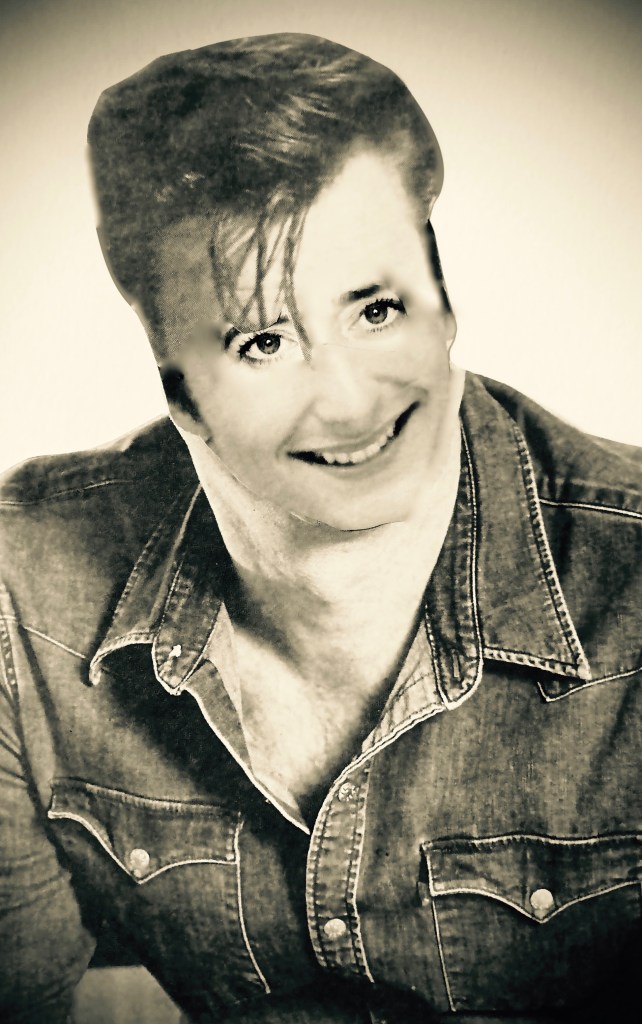
b. Antony Spumoni 1952, Bloomington, Indiana.

“Ya gotta have a gimmick,” or so advised the late Stephen Sondheim in his 1959 musical Gypsy. Well, Antony Spumoni thought he had a doozy. The concept was simple: Sing country songs in cod-operatic style and wait for the variety show dollars to start rolling in. That this particular shtick failed for so long was not for want of trying, it turns out that it was simply a stupid idea. For despite superficial similarities between the two genres—both are lachrymal, over-dramatic, and unhealthily obsessed with drinking, death, and yodelling—they don’t really blend at all, and end up cancelling each other’s best points. And yet….

——————————–

Spumoni’s oddball mash-up spent a long-time gestating. Indeed, he first started telling friends he’d “invented a new musical genre” while attending the Julie Hard School of Music* in Bloomington during the mid-1970s.  He refused to say what this genre was out of a ludicrous overabundance of caution: Spumoni truly feared one of his fellow musicians might steal the idea and swipe the awaiting fortune he thought his rightful due.  

Our hero didn’t get around to putting his plan into action until 1996 (hence the punning, advanced-age referencing stage name) when he got himself transferred from the Fur, Feathers ‘n’ Fun pet store he’d managed in Sanders, Indiana for over a decade to the shop’s Nashville branch to facilitate the launch of his new career as ‘Grand Dad Opry’. It was here that Spumoni finally began re-tooling popular arias for a country audience: Thus “Libiamo Ne’lieti Calici” became “One More Drink (No, Better Make That Ten),” “O Mio Babbino Caro” became “Dear Ol’ Daddy”, “Nessun Dorma” became “Ain’t No-One Gonna Sleep Tonight”, and so on and on. A large, round man in the tradition of male opera tenors, Spumoni wore formal tails augmented with rhinestones, a similarly decked out 10-gallon hat, and a bolo tie clasped by a locket hiding a picture of his mother.

He spent several years in Music City polishing his act. Unsurprisingly, no one wanted to know. To make matters worse, he chose to self-release his music exclusively on Cassingle, calling them “the music delivery system of the future.” Perhaps if he’d been making Hastings Grimestep Glitch Techno, Spumoni might have garnered some hip cachet, but as it was (and, indeed, is), Cassingles were (and are) a thoroughly inefficient and very silly way of music sharing.

Finally, in the mid-teens, when he had all but given up on his dream, pretentious East Nashville art-school types in need of weirdo performers to fill out bills began indulging Spumoni. A cult act’s cult act, Grand Dad Opry was publicly lauded by none other than Ginger Minge of the notorious shock-folk due The Kunt and the Aids. With characteristic grace, Minge declared, onstage at DRKMTTR in Nashville, that anyone who didn’t like Spumoni’s show should be “forced to watch their own mother being sodomized and cannibalized by leprous stockbrokers, starting at the feet for both.”

And then, as Sondheim (again) would say, a funny thing happened.

A junior AT&T digital marketing executive, Michael Messerschmitt, was in town to see his girlfriend, who was performing as ‘Krystal Mess’ in an all-female The Kunt and the Aids tribute band cleverly named The Runt and the Raids.** He chanced to hear a cassette of Grand Dad Opry’s version ofLargo al Factotum”, re-titled “Here Come The Bossman”, playing over the East Room PA system. Sensing a kooky commercial hook, the adman sought Spumoni out via a mutual friend who runs The Sounds of Pestilence, one of the Nashville’s three animal embalming diorama stores. A licensing deal was arranged in short order. The ensuing series of online AT&T commercials featuring Grand Dad Opry’s music went viral, providing a balm to a pandemic, election year weary United States. Remarkably, the performances appealed to both audiences: opera buffs enjoyed slumming it and country music fans believed themselves elevated. This paved the way for a best-selling Lp compilation of his cassingles entitled Are You Sure Handle Done It This Way? (Thirty Tigers, 2020). Spumoni retired shortly after, a happy man, his vision realized.

It turns out that sometimes the stupidest ideas are the best ones.

* Ms. Hard was soon legally forced to change the name of her school. She didn’t learn her lesson, however, and suffered a similar fate with her next conservatory, The ‘Berkley’ College of Music.

**Jesus, things had gotten very meta in this particular scene.

Categories
Novelty Act Solo Singer-Songwriters

Lefty Wrong

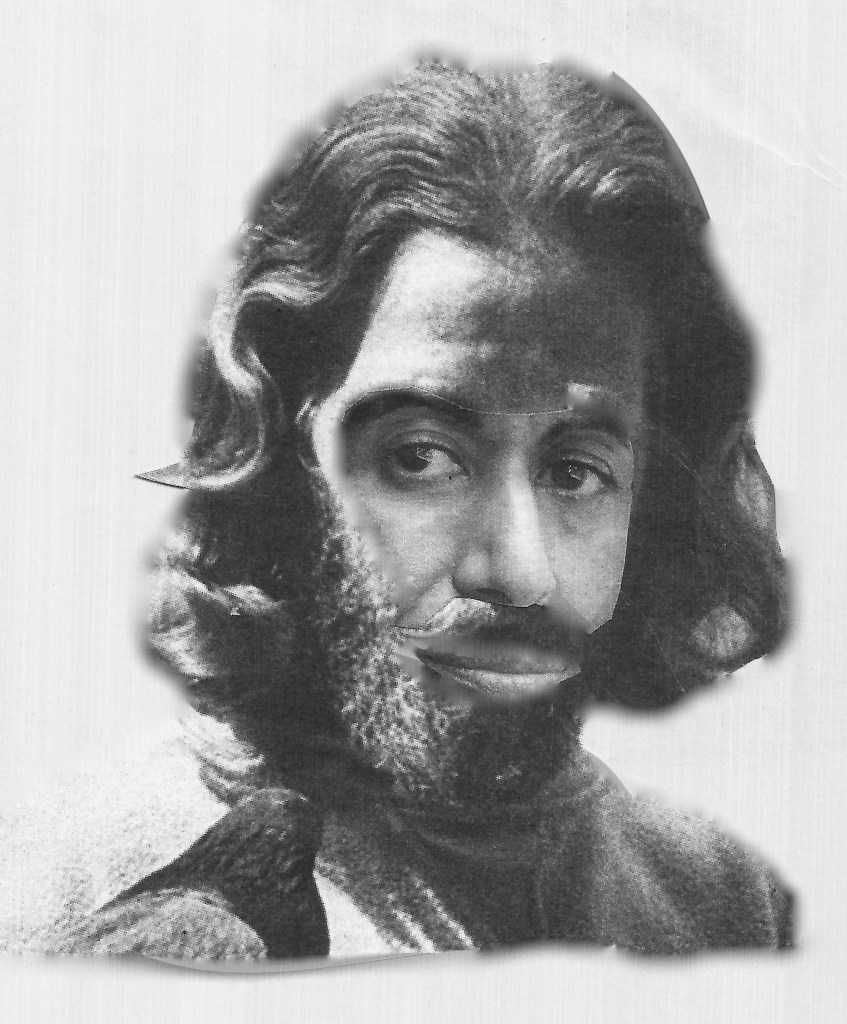
Lefty Wrong (b. 1985 Sarasota, Florida; d. 2021 Alpine, Texas)

Born Laurence Krantz, Lefty Wrong looms small as an archetypal “What If…” story in the annals of Americana. Krantz’s parents were circus carnies and, being in the business of show, were forever entertaining visitors with the stage props and musical instruments to hand around the Krantz home.

It was no place for a child.

Juggling pins once concussed Young Larry, a youthful greasepaint experiment chemically burned his backside, and the house upright bass nearly crushed him aged three, leading to a life-long fear of any musical instrument greater than toddler size. And so, he took to the ukulele.           

However, Krantz’s klutzy strum kept breaking the uke’s ostensibly resilient nylon strings, earning him the family nickname “Lil’ Concrete Hands”* from his father. So profligate was Larry’s string abuse that the elder Krantz soon gave up replacing the strings altogether, so that as often as not, the boy was picking away on just one string, which he repaired by tying pieces of broken strings together. This ‘Frankenstein’ string created a loud hum when plucked earning him another family nickname, “Lil’ Annoying Buzz”**.           

Krantz adopted his self-deprecating stage name years later in a fit of pot-fuddled whimsy shortly before his début open mic performance in Gainesville, where he was enrolled at the University Of Florida. It was during this period that the newly christened Lefty Wrong*** developed and perfected a remarkably eccentric repertoire and singing style that involved half-yodelling, half-grunting songs originally performed by Dock Boggs, Doc Watson, and Doc Severinsen.            

Shortly after declaring himself a UoF Communications Major, an illustrative incident occurred during the course’s formal introduction session. Students were required to write and delivery a potted autobiography to their classmates, an exercise the head of department insisted on in order to get a decent read on each individual’s public speaking abilities. Nervous and high as a kite, Krantz reverted to his Lefty Wrong stage self and half-yodelled, half-grunted his way through the speech. At the end, his teacher shook her head and joked that she wasn’t sure “if that was English or Nadsat,” the class laughed, and congratulated itself on appreciating the professor’s Clockwork Orange allusion. Larry lasted two more semesters before sensibly dropping out and moving to Saint Augustine to push drugs full time, a more honest and certainly more lucrative way to pass the time.

Soon, he took up with the old-timey St. Augustine beachfront musicians and started to study mandolin and claw hammer banjo in earnest. While he never quite mastered the two instruments, the still uncannily heavy-handed Lefty could fake it just well enough to fool Americana dilettantes.

Even among the Saint Augustine’s bronzed beach bums, Laurence Krantz was not considered an ugly man, and had let his dark, curly hair and beard grow out just enough to blend in with the local bohemians. His hands, however, were almost permanently oil-stained, as he was working at the local Jiffy Lube in order to make ends meet when the retail marijuana business was dry. Locals grew to recognize his banjo very well, not due to Lefty’s distinctively clunky picking, but because of the banjo resonator and fingerboard’s oily brown patina and the ends of the instrument’s strings had globs of black grease where Lefty cleaned his fingernails. At the same time, Lefty’s vocalizing could kindly be described as ‘singing adjacent’, more akin to hillbilly wheezing with a few recognizable words tossed in to make the listener think there was perhaps a real song there.

Certainly, he could croak out a tale or two, and those tales usually involved swindling drug dealers and then sleeping with wild women with whom Lefty had just done swindled drugs. It was considered bad form to brag about these things, and the stories circulated, tarnishing both his stage and given names almost as much as his fingers. After his dealer roommate caught Lefty pinching the goods one too many times, he was kicked out. The small, closely-knit Saint Augustine drug dealing community closed ranks, more or less blacklisted Lefty, forcing him to drift onwards.

As bad luck would have it, a proper train wreck of a girl named Clementine Sloan had recently seen Lefty perform and had drunkenly extended an open invitation to join her in Dallas whenever he had a mind to. Taking it as a sign, he gathered his remaining seventy dollars and hopped a Greyhound to Big D. Sloan was deeply embroiled in another relationship at the time, and her boyfriend did not take too kindly to this “Sweet Sufferin’ Jesus hairdo motherfucker” showing up at their apartment in the middle of the night. A knockdown fight ensued, ending when the boyfriend smashed Lefty’s banjo over his head. Bleeding and concussed, Lefty headed into to town, drank away his last few dollars, and slept at the Aquarium in Fair Park. He applied for a bed at the shelter the next day.

The shelter required mandatory 12-Step meetings, and at first it appeared that Lefty Wrong was going to walk into the light. Within a few months, the still young man managed to get a job at Lube, Tube & Doob, a combination oil change, tire repair, and vape shop in Deep Elum. His parents had recently re-connected with him and had sent along his old ukulele in the mail addressed affectionately, if prosaically, to “Lil’ Estranged Son.” It still had flecks of regurgitated chocolate pudding powder on it from a childhood vomit incident. 

A rental room opened up, and some time shortly after that Lefty took up with the wrong bartenders and soon begun moving herbs around Deep Elum. He bought a decent guitar and took to wearing a 3-piece thrift store suit wherever he went. Before the year was out, he was a known character around local open mics again, with Clementine Sloan always on hand to offer thoughtful bathroom or back alley bumps.

With his newfound fortunes, Lefty Wrong bought a used Nissan Rogue and celebrated by inviting Sloan on what he said was a “totally random trip” out to Marfa, in West Texas. In fact, the journey wasn’t random at all. Per the request of a Dallas Cartel associate, the intention all along was to mule a significant amount of drugs back to Metroplex, intentions he kept secret from his darling Clementine. Unfortunately for the pair, the journey went sour after an all too familiar Cartel misunderstanding and they were both shot in the back of the head by the side of the highway.  

*His father was a fan of Elvis Costello. And also of opioids.

**Which, coincidentally, his father also nicknamed the particular ‘high’ he got from opiates cut with talcum powder.

***A misnomer no-one, including Krantz, ever caught: He was right-handed.

Categories
Novelty Act

TKATA

TKATA
The Gay Farmer  (pictured) b. 1987 Franklin, TN, d. 2019 Austin, TX;  
Ginger Minge b. 1984 Minneapolis, MN  

Art school brats formed satirical bands all throughout the rise of the East Nashville Americana scene in the 2000s, existing in a parallel universe of japes and outrage. By design, these merry pranksters were built for little more than house party fun, and few expected to achieve anything else. There was, however, one band, the ever-so-charmingly named The Kunt and The Aids*, who briefly broke out among the scores of flannel-clad beard-wearers earnestly strumming 6-string banjos and Tenor guitars.

This “mock-folk” duo, inspired by fellow smut-peddlers and country music freaks Birdcloud, used a Fun Machine keyboard, Ovation guitars, and vocoder drenched harmonies to compose hickified sing-a-longs about bestiality, the joys of revenge porn, public defecation, and other topics Willie Nelson was too chicken-shit to tackle. Their twisted, cornpone ditties were as catchy as an airborne virus and twice as funny.

Both band members were absolutely devoted to their outrageous personae. Pete Gaston, aka “The Gay Farmer,” was known to wear a tutu with overalls on stage, while the ever-unpredictable “Ginger Minge” (born Thomas Edward Grovitz) regularly appeared with dildos and VagiPals festooned to his outfit. Unafraid of cheap onstage shock tactics*, the band garnered headlines that only the best faux scandal could generate.**  

Despite a devoted underground following from coast to coast, and a decent European following to boot, a band called The Kunt and The Aids singing songs called “Flag Slut” and “Dick Pics (From Hell)” was never going to appear on The Tonight Show or Good Morning America. But Social Media and the Internet is tailor-made for such provocations and TKATA (as the trade magazines were forced to call them), whose followers numbered in the 15 to 20 thousand range according to SoundScan, more than made due playing hundreds of well-paid, PBR-soaked gigs in the clubs and houses of their devotees. Their début Lp, I Married A Teen-Age Nazi (Bludinstule Records, 2017), boomed out of college dorm speakers for a good part of the late teens, even if at least half of those listeners missed a good deal of the irony.              

Alas, the fun wouldn’t last. In 2019, Gaston was arrested for assaulting a Spotify Podcast Sales Specialist during a SXSW after-show. Speeding away from Travis County Jail after making bail, he crashed his powder blue Subaru Forrester into a guardrail on Interstate 35 while swerving to avoid colliding with an oncoming driver who was texting her husband about a mis-ordered vegan pizza. The Subaru ended up rolling several times down an embankment into a piece of construction equipment, impaling Gaston’s torso on the stick part of an electric washtub bass that he had built in art school. He died. The other driver was charged with vehicular manslaughter, but was acquitted largely, it seems, because the defense kept repeating the name of Gaston’s band. 

Back home in Music City, East Nashville was in mourning. Another legend gone. Without telling a soul, Grovitz moved to Reno to study nursing.  He has never played another note.

* According to Grovitz, The Kunt and The Aids got their name “because our first choice, Painful Discharge, was already taken by a Columbus, Ohio punk band from, like, the 80s that had a few records out, and because my dad thought that [TKATA] was was the most disgusting name for a band ever, and ‘Don’t you dare call your band that.’ So, of course, we had to at that point.” 

** Perhaps the band’s most notorious onstage stunt occured at the 2017 CMJ Conference in New York City when Grovitz, dressed as Little Bo Peep, was mounted from behind by Gaston in a lamb costume during a performance of an exceptionallly gross “The First Kunt (Is the Sheepest)”. Some people have suggested it was the reason for the music events/media company’s demise that year.

***Another amusing story involved ‘prepper’ food bucket shill Jim Bakker referring to the band, by name, during one of his already deeply weird broadcasts. The group were performing in the same town as the disgraced televangelist and, dismayed by their antics but tricked by the misspelling of the word ‘cunt’, didn’t quite realize what he was saying when he announced on air, “I pray for The Kunt and The Aids”. The band gleefully projected looped clips of Bakker’s gaffe onstage for the rest of its career.

Categories
Novelty Act

The New Dylan

The New Dylan (b. Carter Jensen, 1995, Charlottesville, VA)

As a lazy rock critic appellation, ‘The New Dylan’ has been distinct less for accuracy or appropriateness and more as a marked curse on its recipients.  Down the ages (at least subsequent to the time in the mid-60s when Dylan became ‘Dylan’, necessitating the clamour for a new one), scores of literate, earnest singer-songwriters have been dubbed ‘The New Dylan’. And while a goodly number of these have been decent or even excellent musicians, none, with the possible exception of Bruce Springsteen, has approached the musical or cultural significance of the namesake.

Christened with a perfectly serviceable ‘Americana’ name, Carter Jensen chose to provoke the ire of the show biz gods by selecting a stage name seemingly begging for failure. That he compounded his error by making a baffling satirical concept album as his début demonstrated an appalling lack of judgement buttressed by almost Orson Wellsian self-belief. Sadly, Jensen didn’t lack talent. At least that would have made his short-lived music career more comprehensible. In fact, Jensen, who retained a look that combined the Millennial hipster with a 90s boy band member, was a too-clever-by-half prankster whose obscure in-jokes simply went over and around everyone’s head.

From an early age, Jensen was a prodigious smart-ass. While this earned kudos from classmates, his teachers were far less understanding. During his third grade year, for example, Jensen spent virtually every night in detention for one transgression or another. By the time he was in eighth grade, he was publishing a well-observed and bitingly harsh blog (“Eat My Ass–It Tastes Like Chicken”) based on his experiences and observations of Middle School life. Somehow, Netflix caught wind of Jenson’s work and optioned it for a series. A pilot episode for the series, tastefully shortened to It Tastes Like Chicken, was filmed with Asa Butterfield (The Boy In the Striped Pyjamas, Sex Education) as ‘Carter Johnson’, but a full series was not commissioned. Nevertheless, a substantial sum of money from the option was put into trust for when young Carter came of age.

In the meantime, Jensen took up the acoustic guitar and begun to investigate the ‘old timey’ music of Harry Smith’s Anthology of American Folk Music. Its manic energy, cleverly veiled sexuality, and muscular surrealism appealed and contrasted with the heavy irony and banal brutalism of contemporary pop.

There exists a folk clique dedicated to the ‘old, weird America’ around the University of Virginia, where Jensen, as a junior in high school, was taking advanced placement English courses. It was at this point, while hanging out with the bewhiskered, bespeckled, real-ale drinking academics of UVA, that he began formulating what would become his ‘The New Dylan’ persona.

Unlike many musicians of a folky bent, Carter Jensen never really fell for the music of Bob Dylan. He was something of a purist and regarded Dylan as a ‘popularizer’ who stole lyrics and themes from ‘genuine’ folk artists. Still Jensen recognised the great man’s career arc as ripe for parody. Unfortunately, his didn’t recognise the severely limited appeal that such satire might have in the 2010s, however well rendered, and heedlessly ploughed through his considerable Netflix money to finance the production of an audacious Lp, The New Dylan Has Arisen (2017) on Thirty Tigers (who really should have known better), based on the life and career of the erstwhile Robert Zimmerman, carefully aping the style of each era.

The song titles effectively tell the story:

  • “This Song Is My Song (This Song Is Not Your Song)”
  • Moan Baez, More Like”
  • “It Takes An Electric Guitar To Make Pete Seeger Cry”
  • “I’ve Got Those Contract Breaking Motorcycle Crash Blues Again”
  • “Big Stink”
  • “Self Parody”
  • “I Hate My Wife (But This Song’s Not About Her)”
  • “Shilling For Jesus”
  • “Knocked Out Another Album”
  • “Frog In My Throat (For 30 Years & Counting)”

It was a bold move, but the jest quickly soured. Most of the prospective audience was completely turned off, believing the title a serious boast. Casual music fans were thoroughly nonplussed, regarding the album as simply peculiar. It effectively ruined any hope of a job in the music industry. Another proposed song-cycle, this one based on an imaginary meeting between Buck Owens, Roy Clark, and Jack T. Chick (provisionally titled Haw Haw), never materialised, nor did plans to rebrand himself as folk-rapper Nude Illin’. Shortly following the debacle, Jensen quit playing guitar altogether.

Jensen later worked for a short time as an assistant showrunner for The Simpsons, before his well-observed and bitingly harsh blog about the experience (“Not As Funny As It Used To Be”) got him fired.

In an interesting twist, Bob Dylan himself has been known to perform “Frog In My Throat” during rehearsals.