Categories
Solo Singer-Songwriters

Jeffrey Friedman


Jeffrey Friedman b. 1981 Youngstown, OH

Jeffrey Friedman, formerly the bass player of Storm & Twang and front man of The Fried Men, took what little earnings he got from a publishing deal that he’d lucked into upon first arriving in Los Angeles, and started a lucrative pot growing business out of his Eagle Rock garage. He possessed a green thumb, and the money rolled in. He would often play banjo to his plants, and sing them little songs that he made up on the spot. Things went well enough that soon he was able to afford a small chunk of land outside Landers, California near Joshua Tree. Here, he went full-scale ‘indoor warehouse grow’ and began to compete with the best of the best in the burgeoning California legal weed market. As with all recreational drug distribution channels, anyone doing reasonably well would most definitely meet unsavory characters along the way. These people would present themselves as ‘businessmen’ and then turn out to be very much connected to a cartel.

After moving to Nashville in the Great Eastward Migration of the 2010s, prior to the global pandemic, he continued to enlarge his marijuana business. He retained employees back in California while steadily branching out with a 60-acre purchase outside Columbia, Tennessee that was flush with pure underground spring water.

Friedman had a few local employees running that operation while he kept a house just north of Nashville in Whites Creek, where he lived alone with an orange Tabby cat named Sanchez. Although he purported to be a musician, and was actively playing sets at various East Side bars, he was in fact a successful drug dealer who was not quite able to shake some California business ‘partners’ interested in branching out to the ever expanding central Tennessee market. As a result of his dabblings in music (a somewhat genuine talent), Jeff Friedman quickly became the dealer or choice for many up and coming scene-makers, producers, lawyers, nurses, music business wranglers, as well as reefer connoisseurs residing in East Nashville and Music Row.

Lo and behold, it turns out his side hustle as a four-track cassette-recording enthusiast began to perk up some ears as well.

Several local clients were producers and Spotify tastemakers. Occasionally, Friedman would play his own music over the sound-system in the Whites Creek barn where he stored his weed, and, eventually, some heard a few of the unmixed cassette tracks while visiting. One of them asked to have a copy so he could bring the music to a label friend. At first, Friedman was sceptical, thinking his days of music business hustling were over, but the producer buddy was persistent and eventually Friedman mixed down a rough copy of the cassette into MP3 format. And thus we have the spark which ignited the fuse that detonated the bomb of this unfortunate story.

Between networking, establishing new contacts, and hiring employees Friedman unintentionally, if naturally, let more than a few distant relatives of the Sinaloa Cartel into the fold. Within a few years, men who wished to expand the business into more lucrative drugs, such as cocaine and fentanyl, were paying him visits. In the meantime, Friedman, who spoke enough Spanish and also was a serious aficionado of the gangster balladeer Chalino Sanchez, had begun recording his own Americana-tinged versions of original narcocorrido-style songs. 

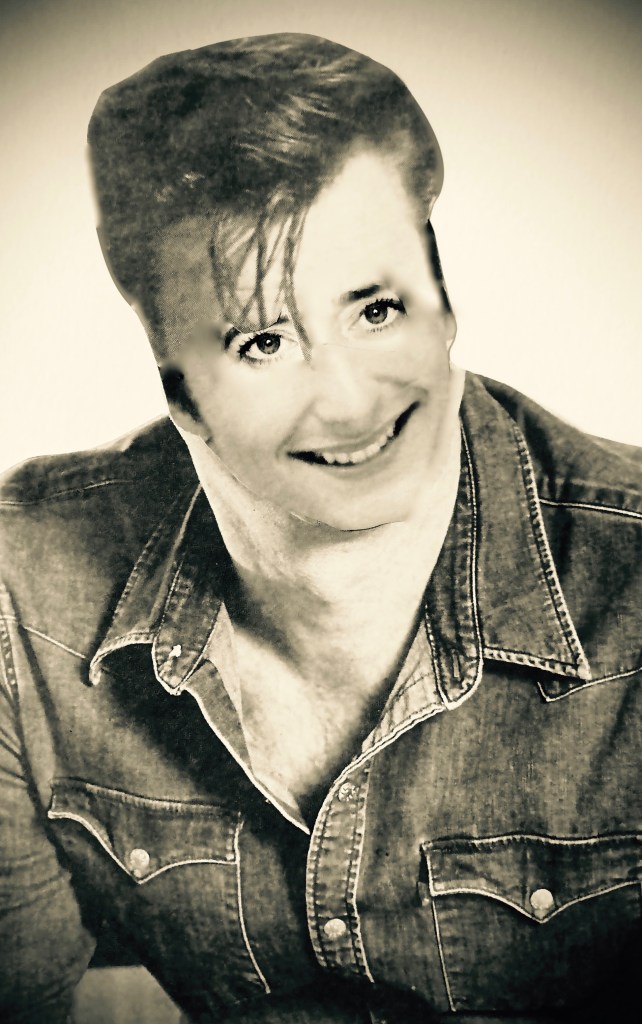
Friedman was tall, laid-back, and handsome enough. He often sported a leather trilby and had a gentle way of expressing himself. If there was nothing threatening about Jeffery Friedman, his colleagues were another matter.

After a music business associate made a Soundcloud link to pass around, the MP3s of Friedman’s songs began to circulate. The cover art was crudely made on his laptop from a printed image of the barn with the words “Passenger Slide” stamped directly on the front with an old typewriter. The photograph also featured a barely recognizable (to most) image of a lanky character in a straw cowboy hat entering the barn with a banjo on his shoulder. 

One of the first people to hear the tracks was Kim Gantz of Dirty Pike Music. She raced out to meet Friedman and pitch him a deal. There was no two ways around it, the songs, primarily about the exact details, habits, mannerisms and fashion of actual drug dealers and cartel members, were catchy and recorded in a lo-fi way that made the listener feel like they were hearing something timeless and immediate at the same time. It was real street music, sung about real characters. Friedman possessed a gift of a baritone voice that kept your ears attuned. He wasn’t a perfect singer, but there was conviction there and any listener hung on every word.

The first track on the EP, called “Something That Is Real” had the lyrics:

I am no imitator,

I will not instigate your heart.

To break without good reason,

I have work to do and I am a man of my word.

The next time we arrive here,

I will have all of the things you need.

The silver and the gold

And we will take this town.

Other songs, with titles such as “Franklin By Midnight,” “Take Me To The Springs,” “River Of Blood,” “Last Strain In Clarkesville,” or “The Rat On The Roof” told specific details of drug deals that had gone well and some that had gone awry. The most popular track was a lone banjo and vocal song called “Man In The Black Truck” and it had specific details of an especially dangerous thug that Friedman had only encountered once down on the grow site outside Columbia, Tennessee.        

His Mexican associates referred to this particular gangster as El Animalito (The Little Animal).  Friedman, who had never ran afoul of his business partners, was very fortunate in that he never had to do any of the truly dirty work, i.e. the intimidations and sometimes beatings of local hoods who were late on paying their bills after being fronted drugs to sell. The successful pot farmer slash songwriter “El Jefe” Friedman maintained his own crew of both Caucasian and Latin American youth that had come up through the chain of command and had passed the various tests of trust and soldier camaraderie. 

The cartel was simply not ever going to let a business opportunity just evaporate and the connections from California to Tennessee just got thicker as time went on. The Sinaloa Cartel in particular was brilliant at placing American born sons into universities where they would get business or law degrees and keep tabs on the local trade. These descendants of thieves had money and fast cars and they were able to infiltrate social scenes. They had jobs at legal firms and were completely planted to keep track of the workings of all illegal drug trade. They were not interested in the legalization of any of the drugs they moved and therefore letting the government take a cut of their money. Ironically, many were knows to contribute heavily to the campaigns of politicians who were anti-legalization of any kind.

As the underground popularity of the Passenger Slide tracks and then homespun videos made by super fans just took over the Americana internet channels, the Spotify numbers just rose and rose until eventually there was actual money being reported via the ISRC Codes implanted in all songs on all formats. So where was the money to go? At first it went to Dirty Pike Music, who then had to report these earnings and then open up an account with Friedman so that he could be paid his rightful royalties for being the composer, performer, and sole musician and vocalist on all of the tracks. 

This was all a big surprise to Friedman, who didn’t have Spotify or television and basically listened to old blues and Narcocorrido albums on poorly attended vinyl and cassettes up in Whites Creek. He was completely unaware that local radio stations—specifically WXNA, had begun to play his songs quite regularly. Other local stations followed. Eventually, the call came in from Todd Snider, who was also a customer and had heard the tracks first hand, to do a support slot at The Ryman set for April 20th of 2021. The gig was eventually cancelled due to a Covid-19 situation, typical of that time, but Friedman and Snider decided to have a little shindig up at the barn in Whites Creek on that same day anyway. The party attracted more press about Passenger Slide and what it was all about. Nashville Scene did a two-page spread with the headline “The High Life In Whites Creek”, which featured photos that accidentally showed the distant relatives of actual cartel members. The FBI began to make just enough of a show to motivate certain activities intended to preserve the way things were. 

One week after the Nashville Scene article came out, Friedman was paid a visit by El Animalito himself, along with a few of his subordinates. They got out of their trucks at 8 a.m., and kicked the door down, startling Friedman, who had taken to falling asleep on the couch in his living room, which had also become his home studio and ping-pong room. Friedman’s gun, a loaded, old-school cowboy style Colt .45 revolver, was on the coffee table next to him. There was no time to reach for it and besides he was severely outnumbered with several guys packing much more serious heat. 

It seems the higher ups at the Cartel were none too pleased that Friedman has called so much attention to his (and by proxy, theirs) operation with his “pequeñas canciones maricon” (little faggot songs) that revealed a little too much. He tried to reason with them, but the order had come down, and while the subordinates surrounded the couch, the boss appeared from the kitchen calmly petting Sanchez the orange tabby cat and humming the melody from “Man In The Black Truck.”  El Animalito, who had used cat food from his pocket to attract Sanchez, slipped on some oven mitts that were next to the stove, and continued to pet the purring cat. At once the men all grabbed Friedman and slammed his face down on the ping-pong table, ripping down his sweatpants and underwear.  El Animalito slammed Sanchez down on the table in front of Friedman’s face, took out a machete and severed the head of the cat in one fell swoop. 

Friedman was crying in horror at this while the little underboss made his way over to the instruments hanging on the wall nearby. He grabbed the banjo that was used in “Man In The Black Truck” and walked behind Friedman, who was still being held down by the underlings. “No mas Spotify, no mas Chalinillo,” he kept saying, using the derogatory term that Mexican music fans had invented for Chalino Sanchez imitators, before sodomizing him with the headstock of the banjo and smashing the body onto the Friedman’s head, severing the neck from the body of the banjo, while also rendering him unconscious.

Before exiting the property, one of El Animalito’s men watched over Friedman’s limp body while the rest went into the barn and helped themselves to all of the product that was stored there. They also took all of the Passenger Slide vinyl that had been recently delivered, plus used a baseball bat to smash all of Friedman’s recording gear, and were gone before 9 a.m. When Jefferey Friedman came to, he called a friend and told them to bring over a first aid kit. There was a mess to clean up, and there was business to tend to. 

The phone call to Kim Gantz was easy. Legal documents had never been signed, so when Friedman asked her to remove the tracks from Spotify and she protested slightly Friedman yelled, “Take the fucking songs down right now!” and hung up the phone. 

Passenger Slide was, obviously, never performed in public, and the Spotify account was removed the following week. All bootleg social media accounts were issued a cease and desist order, through Friedman’s lawyer, and the town quietly murmured about what may or may not have happened.

Today, the songs are the stuff of whispers and legends, as it is never brought up around Jeffrey Friedman, who gratefully returned to the horticultural life that had first brought him peace.  
Categories
Religious Solo Singer-Songwriters

HUCK PAXTON

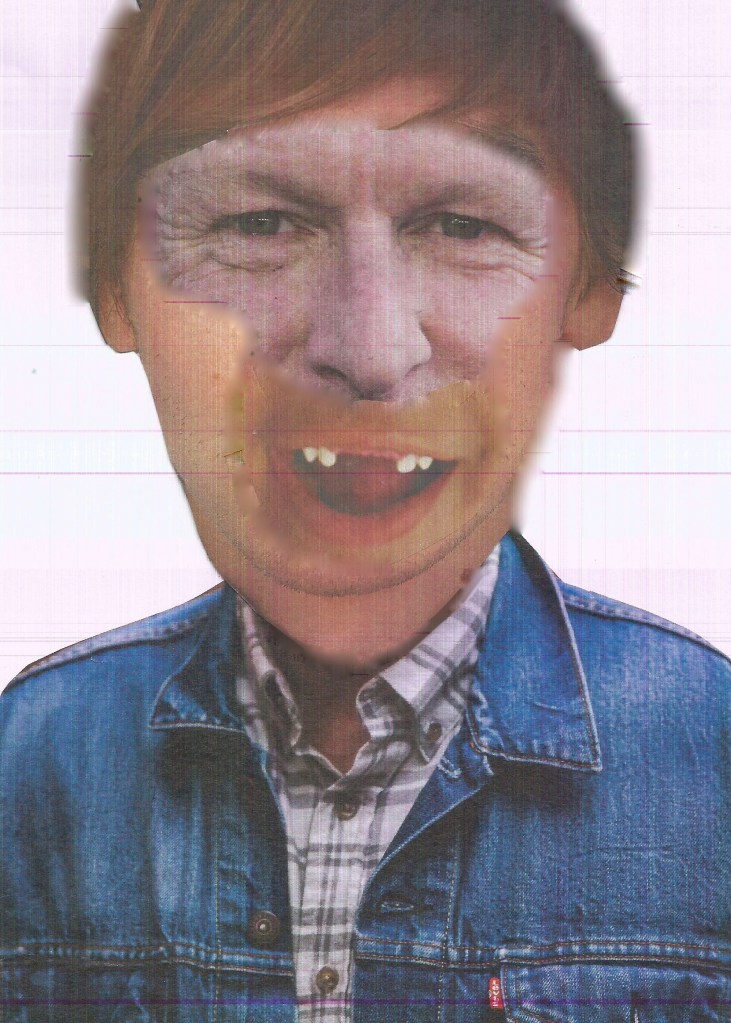
Normally we at Americana Unsung research and write our own profiles of alt. country’s lesser lights. Recently, however, we received an unsolicited auto-biography from former Bloodshot & Yep Roc recording artist Huck Paxton. Not that we necessarily want to encourage this sort of thing, we felt this story was simply too good not to publish. So with no judgment and only slight edits for clarity and punctuation (for the subject was, as he stated in the March 2023 cover email accompanying his memoir “a damn good story teller but a hack of a writer”), the editors of Americana Unsung have agreed to publish his story, pretty much verbatim leaving most of Paxton’s eccentric syntax intact.

The Troubadour Hustle aka ‘Dancing With The Devil’ 

I am not famous. Sometimes, when I talk to people, I can tell that they think I am famous. On any given day-to-day walkabout, I can stroll freely about town and not encounter what actual famous people tend to call their “superfans.” I only have about a dozen or so, and they can get ahold of me very easily on The Internet. None of my superfans live in Nashville, Tennessee, where I see bonafide celebrities at the local supermarket. You can find some of the best pedal steel players in the world just by standing around in the produce section of the Kroger’s. I have had several occasions when I found myself shopping for veggies alongside notable singer-songwriters like Gillian Welch. Once, once while her and I were both milling over some eggplants, I tried to make small talk by asking her, “How do I know which one is the best?” She looked up from under her big straw hat, rolled her eyes, and said, “I’m sure you’ll make the right choice.” I knew exactly what she meant.

Long ago, when I had a younger man’s moustache, things were going my way, i.e. the Music Business Machine was behind me and the doors for decent support tours seemed to open, but I simply made a mess of every opportunity. I wrongly assumed this “life on the road” would last forever; being in a new town every couple of days, eating from a never-ending backstage platter of cheese and grapes. I became lazy and complacent, and thought it would be a good idea to not settle down into a relationship back home just because a person may have really cared about me, and instead have sex with whomever I wanted, whenever I wanted, wherever I was.

I managed to get a truck load of songs out of that wayward path, but it was simply a way of life that did not have much sustainability in regards to stability and other things that I had no concept of in my twenties or thirties. Several rehabs later—three for booze and drugs, one for sex, and a few “retreats” for whatever else there is to get strung out on. Unsuprizingly, I found myself struggling to make ends meet.

I still toured Europe here and there, because, as true to cliché, I had a minor hit in Belgium with a song I wrote when I was 26 called “I Will Not Die For Rock & Roll (But I’ll Get As Close As A Blind Man Can)” which got into a cult French rockabilly noir film called Les Diables Rebelles.

Every now and then, because I am accustomed to hustling the good hustle, I will put a song up on my Instagram page. About the same 35 to 70 people seem to give a damn every time. The numbers rarely stray far from that zone. Mostly Europeans, and a few Australians. I do have a few elderly divorcee superfans in Texas and Louisiana that will buy anything I release, but other than that I simply have a hard time keeping the lights on with my music. I needed a regular source of cash, so I took a warehouse temp job after I got sacked from Amazon for crashing their delivery van when I was stoned one morning. Well, I didn’t crash it exactly, but scraped the whole right side of it along the corner of a brick wall that I didn’t realize I was parked that close to. Not one of my best days.

At one time you may know that I made a few decent records: the Plaid Reputation ep on Bloodshot, followed by two Yep Roc full-lengths, Principles Of Chaos and Greydog To Rockford. I was temporarily booked by MANAGE THIS! out of Philadelphia, but I kept sleeping with the wrong people or ingesting the wrong substance, and anyway all of that just sort of dried right up after I couldn’t put ten paying customers in any room in Chicago. I am Writing All of This Down in order to be a proper Cautionary Tale for some young creative that may come along. I don’t want them to make the same mistakes I have made, and then find out at 40 years old that you’ll never be invited to perform on the Outlaw Country Cruise even though you’ve done more actual time in jail than all of the headliners combined. Yes, I may have driven a few cars into the ditch, and I might have flubbed a few shows because I was drunk, and therefore ruined my chances to move up the ladder. The way I see it is that I just wasn’t able to make the Lucky Breaks work for me.

Here’s another nickel’s worth of free advice: maybe don’t take all the mushrooms that Chris Robinson offers you backstage. Maybe don’t sleep with the lighting rig person just because Win Butler did. Maybe don’t drink all of the Jonny Walker Red from The Jayhawks’ rider, several nights in a row on tour, therefore rendering yourself unable to play the mandolin during your cameo in their set. Maybe, instead of taking LSD while on a transatlantic flight, you could read a book or watch a movie. You can thank me later.

Once, while on tour with Jason Molina, who somehow managed to regularly outdrink me, I was so nervous before a show of bigwigs in Los Angeles that I drank far too much more brown liquor than I should have and ended up walking off stage mid-set to throw up behind the speaker column. It wasn’t a great night, and nobody wanted to take me out to dinner or help me get a lift back to my hotel, which I had forgotten to book in the first place, thinking that my manager had done it, but in fact I had forgotten that we had parted ways just a few weeks previous. I was basically homeless and slept in the back seat of my rental car, which was not a new thing. My drunken pleas from the merch table did not garner me any invites to crash on couches, and I did not have any merch to sell anyway, having left it all in San Diego at the venue from the night before. You see what I mean about making a mess?

The next night, in San Francisco, after missing soundcheck because I couldn’t find a parking spot near The Bottom Of The Hill, an audience member loudly barked out the word “yawn” in the middle of my set, which caused a decent amount of titters through the crowd. I got into it with the audience and said something like, “If you’re so G-d damn special let’s hear your songs!” Nobody took me up on it, and I stormed off stage.

At one point after leaving the dressing room to begin my set, somebody had snuck a tie-dyed bandana into my guitar case backstage. Inside it was a crucifix hung on a chain. Some blind instinct made me immediately drape the chain over my head. The silver crucifix hit my chest like a pile of bricks. At first I thought I’ll just stop drinking right now, but a few hours later I was at The Hotel Utah ripped out of my mind.

The tour carried on to Portland and Seattle, and I felt a certain heaviness lift from me that I could not quite explain. I had strolled into a small bookstore outside Medford and found a bible. To my surprise, I read it from start to finish in a very short time. I couldn’t wait to read more and more. I went on line and read the manifestos of David Koresh and Theodore Kaczynski. I subscribed to websites I had never seen before that were telling me the Real Truth. A light was turned on inside me. I did not feel afraid anymore, but I was also still drinking hard cider.

At one point I reckoned that if I just quit trying to make records and slowed down and got a job driving for Uber then maybe I could find myself in a revival position some day.  Five years later, nobody had come knocking. I had been Officially Forgotten. I also gained a bunch of weight and contracted Hepatitis-C. I was able to make rent and car payments, but that was about it. I had no ambition; I had nothing. The local Church Of Christ told me I needed to clean up my act or find another congregation.

I was sick and tired of being sick and tired, as they say. I decided to come back to the 12-step rooms and just lay it all out there. A year and some change after that, I have found full-time employment down in the windowless basement of the Nashville Public Library, sorting out the never ending truckloads of books that arrive for me to put into the outgoing boxes to different branches. Some people think that Public Lie-braries are the greatest source of Misinformation and Legalized Pornography going, which may or may not be right. Let’s just say I’m in the belly of The Beast. They tell me that soon I can get promoted to janitor, which will come with a few more responsibilities and a lot more keys. I have wondered if perhaps I should apply to be a janitor at Calvary Hill Church Of Christ because at least there I would be in one of G-d’s many houses. I have also asked myself “now just how many houses does G-d need anyway? Wouldn’t it be easier to keep just one house clean?”

I found a girl that loves me for me. Her name is Cindy. We met in the Program. She only had two weeks off the sauce when I asked her out, much to the chagrin of our local home group. We eventually had to quit going to AA after we encountered one too many loose screw heathen Atheists who believed their Higher Power was a doorknob or the ocean or some other woo-woo cult shit. We found Jesus and that is our story and we are sticking to it, by G-d. 

Cindy is four months pregnant and we are going to start a family. If there is one thing I know, this child will not be reading the terrible books they offer in the Nashville Public School system. This child will be 100% home schooled. This child will not be going to college where they clearly teach the Devil’s words. 

For a short time I had taken to wandering onto the campuses of Belmont and Vanderbilt and testifying. Students would gather and sunbathe in front of me while Cindy, or “Sister Cindy,” as the students named her, would preach when I needed to sit down. They love when I call marijuana “the Devil’s cabbage,” or tell of my LSD mishaps–like the time I tried to go from NYC to Philly in the undercarriage luggage storage of a Greyhound bus. Neither school will let us preach on campus anymore, or within a one mile radius of campus, so we have taken my preaching over to the Five Points area and Germantown, where we can get a decent crowd on a weekend night.

You can write to us. Please do. We are looking for like-minded people to start a family-based organization called G-d First and we would love to hear from you. If you are struggling, please tell us your story. We want to help you. If you run a record company and want to take a chance on a Born Again man who sings songs for Jesus, I am your man!  I have pawned all my gear but I still have my “Beulah,” which was my Grandfather’s Martin D-76. I lost it once in a dice game but the Dutch promoter took pity on me and gave it back the next morning.  If any of you European promoters want to take a chance on a guy who may or may not have stolen money from you in the past, or left a few bar tabs unpaid, I’d like to make it up to you. I swear on my Mother’s Name that I will pay you back, I just gotta get over there and sing some of these new songs first. Cindy will help me sell the merch. 

Reach out please. 

G-d First

PO Box 409

Nashville, TN 37210

  • Huck Paxton, a stage name, was thought to be a combination of the Mark Twain character and Tom Paxton the folk singer.  Presently, Timothy Patrick Ptovsky is named in a cease and desist lawsuit from both the Mark Twain Estate and Tom Paxton. 
  • The editors believe that the once noted singer-songwriter is attempting to start his own cult. 
Categories
Comedy Novelty Act Solo Singer-Songwriters

Boner Jack

Bruce Jackson
aka “Boner Jack” aka “Dolly Hardon”
b. Cincinnati, Ohio 1943

There existed back in the 60s, 70s, and 80s an underground music scene as lively, wilful, and independent as Stiff, SST, and Sub-Pop combined. This scene was made up of the pro- and semi-pro musicians who played a circuit of private members-only bars operated by fraternal and veterans’ organizations such as the Fraternal Order of Eagle, Loyal Order of The Moose, VFW, American Legion, etc. in the Midwestern and Southern United States. These venues fulfilled an important social function, allowing men a safe space to behave in ways which were growing ever less socially acceptable; business was conducted, off-color jokes were swapped, money was lost quasi-legally gambling, and, as concerns us here, country music singers were cheered.

Among these performers was the notorious Boner Jack, who, in the early 60s, was known as Bruce Jackson, a classic country singer in the Hank Williams mold.

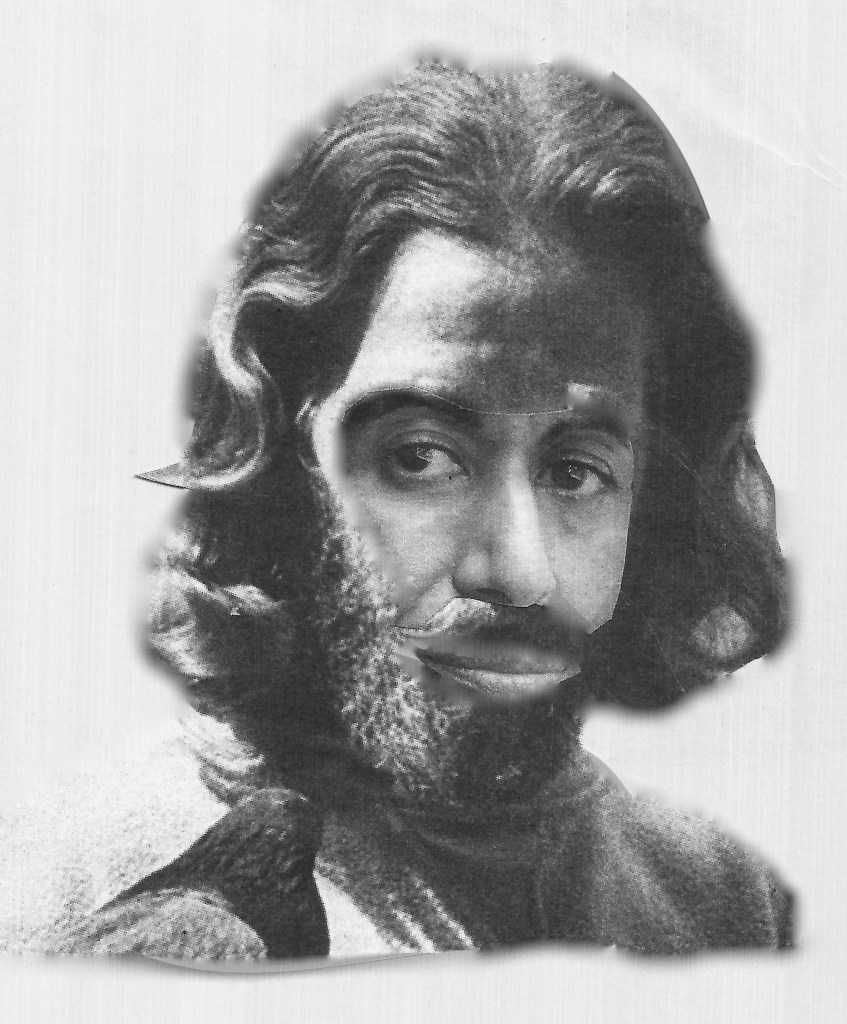
Movie-star good-looking with the slick hair of Sal Mineo, the perfect teeth of Tab Hunter, and the strong jaw line of Rock Hudson, Jackson was regularly seen in the company of gorgeous women during his first flush of (semi) success in the 1960s. Nonetheless, he remained a confirmed bachelor until long after his show business career was over. Indeed, as quiet and retiring off stage as he was flamboyant on stage, Jackson’s personal life was a closed book to all but the series of young, handsome personal roadies who always accompanied him on tour.

Jackson was perhaps best known for his flashy stage appearance, replete with a pink pearl snap shirt with white fringes, diamel-encrusted 10-gallon hat, and a gaudy gold-plated belt buckle big enough to poke a bear’s eye out. He released several well-received singles on Wheeling, West Virginia’s Turn-Pike Records, starting with “Sweet Harvest Moon” and “Runnin’ (With the Devil)”. The others followed suit with plenty of regional airplay, but no traction anywhere other than the tri-state area.

All he needed was a break.

An appearance on The Tonight Show Starring Johnny Carson in 1968 should have been just that break. But apart from striking up a friendship, based on shared experience, with fellow Ohio-native Paul Lynde backstage at NBC Studios, Jackson came away with precious little from his Burbank adventure. While the broadcast gave a bump to his then-current Lp, Tomcattin‘, it was nothing like enough to sustain a career; while the single he was promoting, “Gorgeous Eyes”, struggled to make 113 in the Country Music charts, let alone a showing in the American Top 40. Soon, people stopped returning his calls.

And thus by 1975, age just 32, Jackson’s singing career was all but over; not so much a ‘has-been’ as a ‘never really was’. Eighth on the bill in a regional touring Hee-Haw-style variety show called Corn Pone, he began to resent the very songs he’d recorded over the previous decade which had so signally failed to break him nationally. One drunken night in the middle of the tour, in a perverse act of revenge heedless to the sensibilities of what remained of his fan base, Jackson re-cast his entire back-catalogue with smutty lyrics assured to offend anyone in earshot: “Gorgeous Eyes” became “Gorgeous Ass”, “Runnin’ (With the Devil)” became “Fuckin’ (With the Devil)”, etc., etc. He debuted the new versions the following evening at the Memorial Theatre in Mount Vernon, Ohio. The audience gasped open-mouthed as Jackson snarled one sexually explicit, profanity-laden song after another. As he begun to sing his final song, “Sweet Harvest Poon”, the revue’s panic-stricken director cut power to the stage as a chorus of disgusted boos reigned down from the hall. It was as twisted a musical self-sabotage as anything this side of Metal Machine Music. Sure enough, Jackson was fired as he walked off the Corn Pone stage. He was replaced by a Ken Berry look-a-like comedy monologist.

But in one of those strange twists of showbiz fate, Bobby Sirica was in the audience that night. A booking agent who dealt exclusively with fraternal organizations in the American South and Midwest, Jackson’s puerile re-writes had him in stitches and gave him a flash of inspiration. Immediately after Jackson was dropped, Sirica strode up and told Jackson he could guarantee him five nights a week performing his ‘blue’ act at his clubs in states as far west as Illinois, as far east a Pennsylvania, as far north as Michigan, and as far south as Tennessee. With no other options on the horizon, Jackson summarily ditched the straight Country Music career he’d been denied, spurned the Country charts to which he’d been barred entrance and set about, with his brand new booking agent, creating a new show-biz persona: Boner Jack.

A flamboyant, filthy-mouthed caricature, Boner Jack would be a magnification of Jackson’s already fairly over-the-top stage incarnation. What had been a career suicide attempt turned into a nothing less than a lifeline.

Sirica was true to his word and, shortly, had Jackson working more than he ever had before. Private members clubs pay well and operate under an entirely different legal rubric to their public counterparts and so, unrestrained by obscenity laws or, indeed, taste, Jackson took his stage act to outrageous new heights. He found he enjoyed openly flaunting his personality and was beloved in a way he could have never been previously.

In addition to scatological takes on his own old material, Jackson parodied well-known songs (“Don’t It Make Your Brown-Eye Red”, “When I Get Her From Behind Her Locked Drawers”), as well as newly-written songs in a similarly rude comic vein (“Tanya Fucker”, “I Wouldn’t Kick Her Outta Bed For Eatin’ This Cracker”). Jackson soon incorporated a drag persona named ‘Dolly Hardon’ into the show, performing covers of “The Happiest Girl in the Whole USA” and “Stand By Your Man”, and new purpose-built originals like “Are You A Donnie Or A Marie?”. He further supplemented his income by selling 8-tracks and cassettes of his shows such as Boner Jack’s Triple XXX Party!, Bugger’s Banquet and (as Dolly Hardon) Here You Cum Again, none of which were likely to ever trouble AM radio.

He did, however, get the attention of at least one station owner. In late 1978, country radio maven, Marshall Rowland, received a cassette copy of Jackson’s Hell-Bent for Pleather from his friend, the cult humorist and musician Jerry “The Mouth of Mississippi” Clower. Rowland loved it, knowing, of course, he couldn’t play note one of Boner Jack’s music on any of his radio stations. But he wrote Jackson to offer encouragement and a promise of future help should the opportunity arise. It was only six months later that he called Bobby Sirica to offer Boner Jack a gig with Clower, who was hired to play at a swanky private party in suburban Atlanta. Jackson was scheduled to play the ‘after hours’ part of the show when the more sensitive guests had been packed off. He duly showed up at the Tuxedo Park mansion the day of the show, but Sirica, a life-long Democrat affiliated with the labor movement, refused to let him to perform on discovering Clower didn’t belong to the Musicians Union. Rowland was angry and embarrassed. The situation was only remedied when a last-minute deal was struck to allow Jackson to perform as Dolly Hardon. Honor was duly saved, but any hope of a lasting friendship between Jackson and Clower was dashed following an awkward misunderstanding during a drunken good-night hug.

It was shortly after this that Jackson was offered a potentially lucrative slot as warm-up act on a tour with George Carlin. Calling him a “lank-haired pornographer”, Jackson dismissed the comedian’s observational style as “dirty, and not in a good way” and turned down the offer “on aesthetic grounds.”

Still, the Carlin opportunity lifted their sights. And, per the example of Redd Foxx, Jackson and Sirica, began to plot a move from X-Rated comedy in the denizens of private members clubs into more mainstream entertainment. As they put feelers out, his old friend Paul Lynde booked the singer to perform (under his real name) one of his less lascivious new songs in a (never aired) 1980 re-boot of Lynde’s Halloween Special. Alas, shortly before he was to fly to Los Angeles for the taping, Jackson’s mother Alma suffered a massive stroke and he remained in Ohio to look after her. While the stroke didn’t kill her, it left Alma severely incapacitated, and so her dedicated son turned his back on his second show-business career to look after her.*

She passed away quietly in her sleep in 1987, by which time Jackson had settled down to a modest life with Pat Meecham, the private carer who’d helped look after his mother during her final years. The couple were married on June 27, 2015.

*In the post-pandemic era, as recently as 2022, Boner Jack performed a “’22 Comeback Special” at Flaming Saddles, NYC’s campy cowboy bar.

Categories
Solo Singer-Songwriters

Ralph Lee Gimmel


Ralph Lee Gimmel b. 1989 Charlottesville, VA    

Country Music aficionados will tell you that it was right about the time Curb Records started a Music Business School in Nashville when things just went to hell. Similar programs soon sprung up at major universities across the US, effectively making Frat Boys the majority tastemakers in the music biz. Waylon Jennings himself noted, “these so-called seats of learning cranked out 1,000 degrees for every decent Country tune that’s been written in the last 25 years.” And anyone who’s heard a Hank Williams song might be inclined to agree. Not to mention anyone who listens to Merle Haggard or Willie Nelson or Loretta Lynn, or any number of songwriting masters who lived the songs they wrote, delineating a life in lust with living and heartbreak, and cuttin’ loose all of a Saturday night. Our cynical Old-Timey friends argue that what people call Country Music today is an embarrassment, that the Hot Country Charts are full of garbage, quoting from classic hits all the while growing further distant from the magic that made the originals great.

Charlottesville, Virginia-born Ralph Lee Gimmel was one who knew all this only too well: steeped in Outlaw Country, his alcoholic and abusive father audibly groused about the wicked influence of Nashville ‘countrypolitans’ all the time. No stranger to boozy flights of fancy and wild claims, Ralph Sr. regularly boasted that a young David Allan Coe was his biological father. Ralph Sr. took to saying that since Coe has never returned his calls to explicitly say that Gimmel wasn’t his son, his paternity was almost as good as Gospel.*

But what concerns us here, is how Ralph Lee Gimmel went from street performer to Americana Music Association’s Best Emerging Artist (and where else could you ’emerge’ at the ripe old age of 31?) to the bar-brawling wild-man who pulled a gun in a parking lot, ending up doing five years for domestic abuse and possession of a controlled substance? And all in the space of 2 years?

Nobody will ever truly understand the why or how, but his songs remain to tell the who, the what, the where and the when. That is, they remain in physical copies on vinyl and CD only. There are no traces of Gimmel’s music on Spotify or any digital distribution network. Axton Records and RED Worldwide removed the album from all digital distribution when it was discovered that their charge had been in a physically abusive relationship with his spouse of 17 years, and that the disturbing songs he was singing were the literal truth, and not just the gussied-up fictions of an outlaw poet.  

Gimmel, whose high tenor was augmented by a distinctive sibilance occasioned by having his front teeth punched out in a fight during his senior year in high school, managed to get his controversial opinions quoted on a variety of subjects other than the pathetic state of Country music (e.g. the role of women in society, drugs, immigration, the 2nd Amendment, climate change, etc.) in his few years in front of a microphone. One of Gimmel’s theories about his approach to Country Music also became a verse in his first Americana #1 song, “Feel Good Movie,” wherein Gimmel cleverly turned all the negatives of the protagonist into the positives of a Summer Blockbuster film:

A D.U.I. don’t make me an outlaw,

Like swimming don’t make me a duck.

I don’t get off paying court costs,

To my lawyer who’s a lazy river in a feel good movie.

Another move that endeared him to the local musicians’ community, but alienated him from the major labels, was hiring C and D-list musicians as the band on his album. These perfectly talented pickers couldn’t believe they were hired to play authentic country music. It was a righteous, working man’s move. “How’s a player going to get off the bottom rung unless he gets a session on an actual record instead of cutting demo after demo for some bullshit factory on Music Row?” Gimmel replied to a journalist who asked him why he didn’t use the best guys in town for his session. You could hear the band calling out cues and moves in the background. They didn’t whitewash the life and love out of the music.

Oklahoma oilman William ‘Slick Willie’ Beresford, who decided he was going to get into the music business rather than give all his money to the I.R.S, financed the entire album. He saw Gimmel play one song at an AMA Day party and within 2 years of coming to Nashville, by hiring the right publicists and project managers and a horde of blood-thirsty college graduate interns anxious to sink their teeth into something even remotely real, Beresford and Gimmel defied all the received wisdom about Music City being a ‘Five Year Town’ for success. 

The darkness begins to creep into our story when the album, which critics agreed was lyrically outrageous, musically sharp, and not auto-tuned to the point of being robot music, started to get the kudos it deserved. Having earned the attention of national touring acts who were starving for anything genuine-sounding to help warm up their crowds rather than the latest hat with a guitar who never wrote a damn song in his life, Gimmel had to get serious about hitting the road. He had no children, but he did have a wife that nobody seemed to know anything about. One afternoon, when Jamey Robinson, a staff photographer for The Madisonian, a Madison, TN arts magazine, came over to visit the house for some “down-home porch shots,” Gimmel’s wife, Nora, surreptitiously passed the lensman a folded-up note that read only, “He’s a monster. Help me.” Robinson was nonplussed at first, but eventually Nora’s plea made its way to the proper authorities. Rumors started spreading.

It all came to a head the following Monday night at Dee’s Country Cocktail Lounge when Gimmel, who was supposed to sit in with the Bluegrass session that night, was called out in the parking lot for being a “goddam wife beater,” and he responded by brandishing a loaded .45 revolver, which quickly got the police called in. Shortly, they discovered an unusually large amount of weapons and Crystal Meth in the bed of Gimmel’s Silverado.

Today, Ralph Lee Gimmel is serving out his sentence at Brushy Hill while his wife, having moved back to Charlottesville, collects all the royalties earned from his one album–named with bitter irony–My Perfect Life. It was the first album by an emerging Americana artist to sell more than 14,000 physical copies. 

*During hotel room one-night-stands, quickie fumbles in the back of tour buses, and stage door alleyway knee-tremblers, D.A.C. was well-known to have sired many a baby while on the road, so who really knows?

Categories
Novelty Act Solo Singer-Songwriters

Lefty Wrong

Lefty Wrong (b. 1985 Sarasota, Florida; d. 2021 Alpine, Texas)

Born Laurence Krantz, Lefty Wrong looms small as an archetypal “What If…” story in the annals of Americana. Krantz’s parents were circus carnies and, being in the business of show, were forever entertaining visitors with the stage props and musical instruments to hand around the Krantz home.

It was no place for a child.

Juggling pins once concussed Young Larry, a youthful greasepaint experiment chemically burned his backside, and the house upright bass nearly crushed him aged three, leading to a life-long fear of any musical instrument greater than toddler size. And so, he took to the ukulele.           

However, Krantz’s klutzy strum kept breaking the uke’s ostensibly resilient nylon strings, earning him the family nickname “Lil’ Concrete Hands”* from his father. So profligate was Larry’s string abuse that the elder Krantz soon gave up replacing the strings altogether, so that as often as not, the boy was picking away on just one string, which he repaired by tying pieces of broken strings together. This ‘Frankenstein’ string created a loud hum when plucked earning him another family nickname, “Lil’ Annoying Buzz”**.           

Krantz adopted his self-deprecating stage name years later in a fit of pot-fuddled whimsy shortly before his début open mic performance in Gainesville, where he was enrolled at the University Of Florida. It was during this period that the newly christened Lefty Wrong*** developed and perfected a remarkably eccentric repertoire and singing style that involved half-yodelling, half-grunting songs originally performed by Dock Boggs, Doc Watson, and Doc Severinsen.            

Shortly after declaring himself a UoF Communications Major, an illustrative incident occurred during the course’s formal introduction session. Students were required to write and delivery a potted autobiography to their classmates, an exercise the head of department insisted on in order to get a decent read on each individual’s public speaking abilities. Nervous and high as a kite, Krantz reverted to his Lefty Wrong stage self and half-yodelled, half-grunted his way through the speech. At the end, his teacher shook her head and joked that she wasn’t sure “if that was English or Nadsat,” the class laughed, and congratulated itself on appreciating the professor’s Clockwork Orange allusion. Larry lasted two more semesters before sensibly dropping out and moving to Saint Augustine to push drugs full time, a more honest and certainly more lucrative way to pass the time.

Soon, he took up with the old-timey St. Augustine beachfront musicians and started to study mandolin and claw hammer banjo in earnest. While he never quite mastered the two instruments, the still uncannily heavy-handed Lefty could fake it just well enough to fool Americana dilettantes.

Even among the Saint Augustine’s bronzed beach bums, Laurence Krantz was not considered an ugly man, and had let his dark, curly hair and beard grow out just enough to blend in with the local bohemians. His hands, however, were almost permanently oil-stained, as he was working at the local Jiffy Lube in order to make ends meet when the retail marijuana business was dry. Locals grew to recognize his banjo very well, not due to Lefty’s distinctively clunky picking, but because of the banjo resonator and fingerboard’s oily brown patina and the ends of the instrument’s strings had globs of black grease where Lefty cleaned his fingernails. At the same time, Lefty’s vocalizing could kindly be described as ‘singing adjacent’, more akin to hillbilly wheezing with a few recognizable words tossed in to make the listener think there was perhaps a real song there.

Certainly, he could croak out a tale or two, and those tales usually involved swindling drug dealers and then sleeping with wild women with whom Lefty had just done swindled drugs. It was considered bad form to brag about these things, and the stories circulated, tarnishing both his stage and given names almost as much as his fingers. After his dealer roommate caught Lefty pinching the goods one too many times, he was kicked out. The small, closely-knit Saint Augustine drug dealing community closed ranks, more or less blacklisted Lefty, forcing him to drift onwards.

As bad luck would have it, a proper train wreck of a girl named Clementine Sloan had recently seen Lefty perform and had drunkenly extended an open invitation to join her in Dallas whenever he had a mind to. Taking it as a sign, he gathered his remaining seventy dollars and hopped a Greyhound to Big D. Sloan was deeply embroiled in another relationship at the time, and her boyfriend did not take too kindly to this “Sweet Sufferin’ Jesus hairdo motherfucker” showing up at their apartment in the middle of the night. A knockdown fight ensued, ending when the boyfriend smashed Lefty’s banjo over his head. Bleeding and concussed, Lefty headed into to town, drank away his last few dollars, and slept at the Aquarium in Fair Park. He applied for a bed at the shelter the next day.

The shelter required mandatory 12-Step meetings, and at first it appeared that Lefty Wrong was going to walk into the light. Within a few months, the still young man managed to get a job at Lube, Tube & Doob, a combination oil change, tire repair, and vape shop in Deep Elum. His parents had recently re-connected with him and had sent along his old ukulele in the mail addressed affectionately, if prosaically, to “Lil’ Estranged Son.” It still had flecks of regurgitated chocolate pudding powder on it from a childhood vomit incident. 

A rental room opened up, and some time shortly after that Lefty took up with the wrong bartenders and soon begun moving herbs around Deep Elum. He bought a decent guitar and took to wearing a 3-piece thrift store suit wherever he went. Before the year was out, he was a known character around local open mics again, with Clementine Sloan always on hand to offer thoughtful bathroom or back alley bumps.

With his newfound fortunes, Lefty Wrong bought a used Nissan Rogue and celebrated by inviting Sloan on what he said was a “totally random trip” out to Marfa, in West Texas. In fact, the journey wasn’t random at all. Per the request of a Dallas Cartel associate, the intention all along was to mule a significant amount of drugs back to Metroplex, intentions he kept secret from his darling Clementine. Unfortunately for the pair, the journey went sour after an all too familiar Cartel misunderstanding and they were both shot in the back of the head by the side of the highway.  

*His father was a fan of Elvis Costello. And also of opioids.

**Which, coincidentally, his father also nicknamed the particular ‘high’ he got from opiates cut with talcum powder.

***A misnomer no-one, including Krantz, ever caught: He was right-handed.

Categories
Blues Solo Singer-Songwriters

‘Blind Thomas’ Jefferson

‘Blind Thomas’ Jefferson
b. Clifford Jefferson, Ada, Ohio, 1939.

Famed music producer Sam Phillips reputedly said, ‘If I could find a white man who had the Negro sound and the Negro feel, I could make a billion dollars!’ But the Sun Records impresario could have in no way been thinking about the pale Ohio blues aficionado Clifford Jefferson, aka ‘Blind Thomas’ Jefferson, whose well-meaning, if ill-conceived arrogation of the African-American art form only just bordered on the mediocre and whose purported visual impairment was a wishful pretence cut almost entirely from whole cloth.*            

The history of American Caucasians culturally appropriating from their black countrymen is a long, vaguely (sometimes downright) racist, and, for the hundreds of thousands of white people affected, slightly uncomfortable one.** And in this way, romantic notions of black ‘realness’ and ‘authenticity’, so widespread among suburban whites who only experienced African-American musicians mediated via fawning magazine articles and documentaries, consumed Clifford Jefferson. He set out fervently at age 18 to be a ‘real’ and ‘authentic’ blues artist during the Folk Boom of the late-50s, sharpening his craft for no less than 10 years. Sadly, Jefferson plateaued within the first 90 days of his quest, so that the net result of a decade’s worth of diligent practice was effectively three months’ experience 40 times.

With none of the drive of Chicago Blues or rhythmic subtlety of Country Blues, Jefferson’s technique allowed one true innovation, the 13-bar blues form, which, alas, only succeeded in confusing any musicians unlucky enough to accompany him. And far from the cathartic experience usually associated with the blues, Jefferson’s music conversely made people feel more depressed than before they’d heard it. 

For such a little-known musician (there’s only one known photo extant, above), Jefferson is said to have brushed up against several major blues artist of the time and performed for many of them as they toured the US, though to little avail professionally, e.g. Canned Heat paid him $125 not to open for a 1968 Cleveland Music Hall gig. More recently, an Internet rumour (likely apocryphal) held that Jefferson traveled to the infamous Clarksdale, Mississippi crossroads in search of guitar mastery only to have the Devil turn down the proffered soul, Ol’ Nick deciding that it wasn’t worth the trade.

Clifford Jefferson released only one record during his career, the autobiographical ‘Palindrome Home Blues’ b/w ‘The I, IV, V, VI Blues’ through Arsehoolie Records in 1969 on thick 78rpm shellac, no less.*** After this, he seems to have quickly vanished.

In a career marked by squandered white privilege,  ‘Blind Thomas’ Jefferson did manage to exactly emulate his obscure blues heroes insofar as few, if any, will remember him or his music; a moral victory of sorts.   

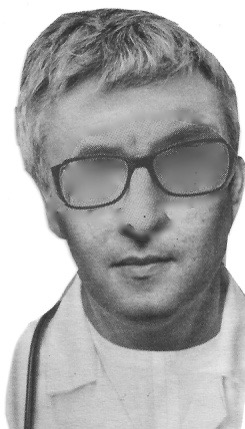
*In order to appear blind, per some of his musical forebears, Jefferson affected glasses with extremely thick lenses making it nearly impossible for him to see to walk let alone what chords his hands were forming. He did, however, suffer from a slight astigmatism.  

**Which is precisely why US conservatives are so right to try and protect their fragile cohort from awkward facts suggested by Critical Race Theory, Beloved, The Color Purple and Inventions and Inventors by Roger Smith.

***Jefferson had originally insisted it be issued as a wax cylinder, but this proved too costly. And insane.


Categories
Solo Singer-Songwriters

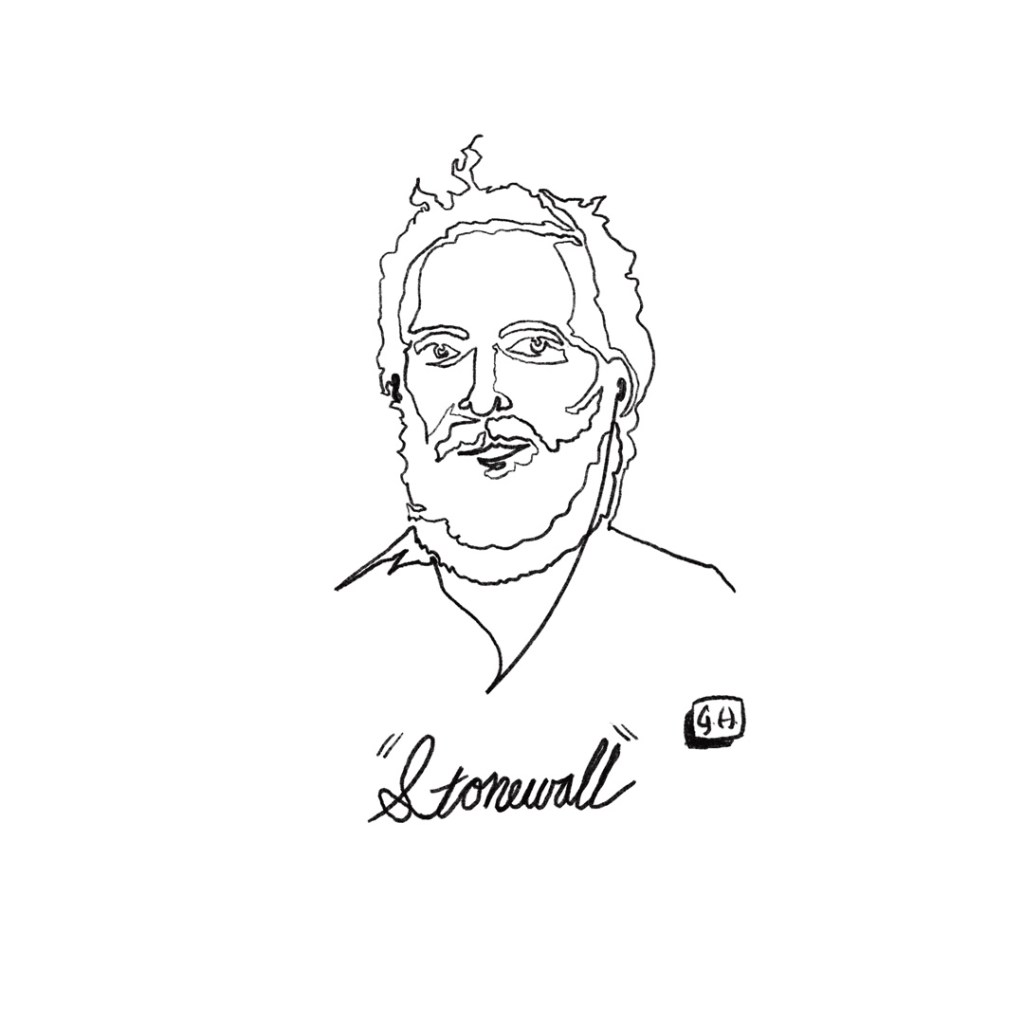
Moses Stonewall Jackson

Moses Stonewall Jackson   b. 1989 Athens. GA

Georgia’s Stone Mountain’s infamous laser show is one of the most fascinating and disturbing uses of light amplification by stimulated emission of radiation technology to honor men on the wrong side of history. The program starts off, harmlessly enough, with the lasers rendering a full portrait of Ray Charles as his exquisite rendition of Hoagy Carmichael’s tribute to the Peach State plays over the speakers stretching across the massive field in front of the mountain. The next sequence is more troubling. Lasers ‘finish’ the world’s largest pro-inequity bas-relief monument by ‘drawing’ legs on the torsos of the horses underneath the 190-foot wide rock depiction of Robert E. Lee, Jefferson Davis, and Thomas “Stonewall” Jackson. Thus animated, the lasers then heroically ‘march’ the Rebel leaders off the side of the mountain, as “Dixie” blares from the PA system. 

One night back in ’88 as the Pink Floyd-esque version of General Jackson marched off the mountain to that Yankee-written Confederate anthem, Hank Jackson, completely loose on the handful of mushrooms that his girlfriend, Sadie Mae Buckley, had supplied, swore that the old general looked him straight in the eye and uttered the words, “I command you to make me a son.”

As cheers rose up from the crowd, the couple wandered off to the nearby woods. Putting strange psychedelic experiences aside, the University of Georgia computer science major took his partner of only four months out into the bushes to do what college kids will do. 

Hank Jackson was not a racist man, and unlike many of his Polo wearing Fraternity Brothers, he was quick to shut down any racist comments within earshot. But he came from a Southern family that had distant relatives who had fought for the South in the Civil War, and some not-too-distant relatives who may or may not have gathered in Klan robes at the foot of Stone Mountain in the early part of the 1900s. He was another example of a boy who grew up with actual Klan members in his family, but was able to break the chain of hatred through the love and education of good parenting. 

Despite this, Hank Jackson chose for the son conceived that night an unfortunate and ill-judged middle name. Still reeling the next morning, he promised the spirit of the notoriously stubborn rebel General who was accidentally shot and killed by his own men at the Battle Of Chancellorsville to name his son in “Stonewall”‘s honor. Nine months later, as he wrote ‘Moses Stonewall Jackson’ on the birth certificate, Hank had apparently not reconsidered; whether it was mischief making or something more profound at that point, we’ll never know.

Moses Stonewall Jackson was sensitive enough to dislike being called by his middle name. He has since been called plenty other things: poet, picker, magician, workaholic, vandal, vagabond street musician, and respected songwriter. Jackson has also been known as a bush pilot, an Alaskan recluse, and founding member of the renegade activist organization Wander The Woods. These days, he is a prophet or a terrorist, depending on which side of the political coin you toss. Either way, there can be no doubt that he is the greatest overachiever in the contemporary Americana scene.

After growing up in the furiously independent and artistic Athens, Georgia music and art scene, Moses, who managed to keep his middle name out of the press for as long as he could, ended up becoming a prolific and talented creative. His parents, who remained in Athens after finishing college, opened a coffee shop and proceeded to curate one of the finest vinyl record collections in town; which you could peruse and spin at their shop.

Moses started writing songs early; creating “albums” of cassette recordings he had made at home using his parent’s stereo. In his earliest days as a budding songwriter, Jackson’s modus operandi was to write a bunch of titles and then just write songs to go with them. These cassettes have so far never been released, but somewhere is a plastic tote full of these early, inchoate projects. Before Jackson had finished high school he had actually released his first album, Another Creek Bank (2007), under the name Bright & Broken. The record came out on vinyl-only (of course) thanks to some like-minded friends in the Platypus Seven Collective that had also released albums by The Broken Bridges, On My Bastard Knees, and other local singer-songwriters who hid behind band names, as was the fad at that time. No legal documents were ever signed, with the understanding that creativity was not to be stunted in any way through contractual tombstones.

After his début seeped out, Moses Jackson did not hang around for any public acknowledgement. Instead, he bolted on a backpacking trip to Europe where he busked streets from Dublin to Barcelona, oblivious to the gathering tide of praise back home. Another Creek Bank started to get passed around college radio, who never waited for someone to tell them if something was relevant or not. 

Meanwhile, through various college connections and tech savvy music geeks, the internet started to buzz about Moses Jackson. Not much was known about him, which added to the allure, and soon ‘genius’ rumors began circulating.

Pitchfork sang hosannas, saying Jackson’s songwriting “…heralds a new form, where lyrical explosions match the sonic surprises.” The word eventually wung its way across the Atlantic to Madrid, where Jackson had taken up residence at Casa del Musica Acoustica, a folk and jazz club that paid him in hashish and Paella. 

Clearly en route to major independent labels and such, Jackson returned to North America to assemble a band that went on to tour the Continental US in a Black conversion van he christened the “Sweet Black Angel,” after the Rolling Stones’ 1972 tribute to political activist Angela Davis; he immediately wrote and recorded “The Ballad Of The Sweet Black Angel,” an ‘aw-shucks’ tale of North American van life. He went on to woo both coasts, not to mention the heartland, before getting dropped by 3 different managers and as many booking agents and publicists simply because he could not stay in the present and support the album he was ostensibly touring. 

The sleeve of the first full-length album under his own name, Moses Jackson Destroys The Past (2008), featured a picture of the cherubic singer on the front with naturally messy hair tucked underneath a Greek fisherman’s hat with his big, youthful, optimistic eyes on full display. It was an instant hit with college DJs. He had the proverbial old soul, and in the face of the widespread cynicism that came with the punk rock ethos still rampant in indie music, there was an idealistic force to the lyrics so forcefully belted out on top of all of the nihilism that the music may have implied. Drums machines, horns, samples–there was nothing off limits, and Jackson was not lacking in confidence when it came to singing, something that went against the grain of the mumbly, echo and reverb soaked vocals that were taking place around the edges of incoherent vocals and weak lyrics scenes that flourished in post-REM Athens. With the advent of cheap synths and reverb units, combined with remarkable sampler technology, Jackson went against that particular grain with thoughtful, enunciated lyrics; nobody had to guess what words he was singing. Even if they did not appear to form a cohesive story, you could tell he was actually reading literature. 

The problem, if you want to call it that—and anybody other than Prince trying to make a dent in the music business would—was that Jackson was simply unable to cease creativity long enough for the public to catch on to any single composition. By the time he reached the West Coast on his first tour, backed by a trio of worthy musicians from Athens, he had composed an entire new album’s worth of tracks. To make matters better or worse, he also not only assembled demos of these tunes through late night workaholic sessions in Red Roof Inns across the nation, but he also insisted the band play the songs live. The “old” songs already felt rusty to him, and there was a new vibe around every corner. As the band progressed up the West coast, they popped into Jackpot Recording Studio, owned and operated by Larry Crane, who also ran Tape Op magazine, and who had recorded a young Elliott Smith, a hero of Jackson’s. During a one day marathon session, the band recorded 13 new songs, 9 of which made it to his second album There Is Another Way, the rights to which he promptly signed over to the Olympia, Washington indie label Kill Rock Stars before the mixes were even done. With the promise that they would print and release the vinyl within three months of that date, and of course pay the studio bill. This time there was an actual contract, but nobody actually read it. 

The word was out. There was another superstar on the rise, and the critics and the super fans came crawling. The major labels did too, but were sent packing after they realized that, as John Lee Hooker had famously done years before, Moses Jackson was constitutionally incapable to fully comply with or understand the subtleties or basic realities of a legal document, and would record and release albums willy-nilly, at a frightening pace, whenever and wherever he could. So for example, only two days after signing the Kill Rock Stars contract, Jackson recorded two songs at the apartment of songwriter Pete Krebs in Portland, which he then sent via cassette to the ultra-indie Okra Records, based in Columbus, Ohio, who promptly printed them into a 7 inch record. Two days after that session, while in Seattle, Jackson visited the offices of Sub Pop records where he verbally agreed to a project that never came to fruition after Kill Rock Stars label owner Slim Moon, in possession of the still wet, yet somehow meaningless contract, called Jonathan Poneman of Sub Pop and explained what was transpiring with the explosively creative troubadour.  

Friends and casual acquaintances all tried to sit Jackson down and explain how lawyers and contracts worked but it was going in one ear and out the other. Both ears, incidentally, were often covered by headphones, as he was constantly listening to or working on demos. He was on a mission to sabotage the norms of creative output, and then he finally met his match, or his spark, so to speak. 

The weekend following the sessions for the Kill Rock Stars LP, the band played two shows in Seattle. Jackson met a young poet and visual artist named Stormy Vanderark from Palmer, Alaska. Stormy was to alter his path considerably. The band was set to drive back to Georgia when Jackson suddenly decided to not go with them and instead follow his new friend up to Alaska where she had promised him a unique adventure. The two of them, along with a young Malamute dog named Huckleberry Funn, crossed the Canadian border in her Subaru Outback and made their way through the Yukon and into the Matanuska Valley, falling deeply in love along the way. 

Once in Alaska, the Vanderark family fascinated Jackson. Stormy’s father Cyrus was a deeply Christian master carpenter, while her mother Rosetta was a superior woodworker, who also created sculptures out of found objects. Rosetta Vanderark reminded Jackson of his own maternal grandfather, Henry Moses Buckley Sr, a Vietnam Vet who welded sculptures out of old car parts and created art that filled his two acre lot just outside Leipers Fork, Tennessee; he had once hosted the songwriter Leonard Cohen for three days of Transcendental Meditation, Yoga studies, and welding lessons. The Vanderark compound, in the village of Sutton, just outside of Palmer, Alaska had 360-degree views of the Chugach and Talkeetna Mountain ranges. They were also just a short drive from Hatcher Pass, a glorious passage through the Chugach range that appeared to be right out of a Tolkien novel. In fact, the whole Vanderark vibe was one of creativity and art from the way their house was built, their garden, the animals, the magnificent mangers they built for the animals, and the constant push towards self-expression and radical gardening. They made their own clothes, and they made their own music, heavily steeped in denim, corduroy, and old-timey folk tunes respectively. 

He and his new love were creating together as well. He worked on lyrics and songs, and she worked on designs for merchandise such as shirts and bags and necklaces made out of old guitar strings and stones from the creek. The Vanderarks had plenty of room and use for a new able bodied man around the compound, and Jackson learned the art of macrobiotic cooking and doing hinterland chores such as chopping wood, Northern climate farming practices, and feeding the horses and goats. 

Jackson stayed on as long as his restless mind could handle, but as the winter 2009 approached he decided to part ways and returned south for Christmas in order to tend to a few personal items such as attempting to pay his bills and also to resume communication with his own family, who had grown somewhat concerned with his radio silence. He was, after all, spending time in a place where cell phone service wasn’t reliable, and nobody cared about posting photos of their latest meal (which, in no way possible, was as good as the fresh Alaskan Salmon, Moose, and Caribou meat that Jackson was enjoying in the North).

Once back home, Jackson grew increasingly irritated with his old, slow moving creative community and their absolute reliance on social media. Jackson himself had been highly addicted, posting regularly on Instagram, Twitter, and other creative hubs. He was known for chronic over-posting, further driving independent record distributors insane with his constant flow of new music, often posting songs the day he wrote them, without much thought or editing; they would garner thousands of hits right on the very week that Jackson had released an album that distributors were trying to sell at media outlets. A lot of hair was pulled out but what could they really do? 

The advent of the Tik-Tok fad was one login password too many for Jackson, and he famously tossed his iPhone out of the window of a moving van as it crossed over an interstate bridge outside of Atlanta. His new bandmates just laughed at his recklessness, but then that same night, when they were set to headline a high-paying New Year’s Eve gig at a private farm in Douglasville, they were unable to communicate with their lead singer, who had wandered off into the woods when he was supposed to be on stage.

This was just too much for his backing group, pulled together from among the few remaining Athens musicians who either didn’t want to kill Jackson or steal his gear to help pay themselves from past tours. When they encountered him a few weeks later, he was unceremoniously chewed out for his foolishness and inconsideration. He copped to it, admitting that he had met “a new friend” who drove him off in the night. Moses Jackson was due for a reckoning, and it came in the form of his band mates and flatmates unceremoniously kicking him out of their shared house. He was not welcome in Athens for a period of time, and although there was always some sad eyed lady of the lowlands or other who would take him in, he grew evermore nonchalant about all things related to his career and social media, and so one day without warning he hit the road for Alaska again.

Arriving in Spring and promptly showing up at the Vanderarks’ door, nobody batted an eye as they welcomed him back into the fold. Stormy, who was more independent than any woman he had ever met, cared less about what he had done in her absence, and more about what he was going to do now that he was back. In her opinion, humans were free to act as they wished as long as they could handle the consequences, something that Jackson was slow to pick up on. 

Before long, the two of them had begun work in building their own cabin on the property of the Vanderarks. By mid-Summer 2010, Jackson had home recorded enough tunes on a cassette four track to print another album. Backing vocals were provided by the Vanderark Family and the songs took John Prine’s old maxim of “blow up your TV, move to the country,” etc… to a new level. Jackson named the project The Valley Below. These were folk songs about destroying Social Media and all or anything related to the old South, but sung with a folksy, family band vibe. One of the songs, “Dead And Gone,” a scathing report on all the sculptures of Nathan Bedford Forrest that dotted the American South, featured the lyrics:

“If you vote to keep Nathan’s sculpture in your Statehouse capitol/we will hunt you down, and put you in the ground.”

This was Woody Guthrie and Phil Ochs on steroids, and when the press got wind of the lyrics they immediately focused on Jackson’s given middle name, causing him enormous amounts of embarrassment. The press also quoted, and deliberately misinterpreted, the controversial lyrics to both “Sweet Black Angel” and “The Ballad of….” In his over-sensitive and defensive mind, he had no option but to answer his critics (now mostly bloggers since major websites such as Pitchfork had ignored him with every project since There Is Another Way.) with another song cycle that attacked the three figures of the Stone Mountain monument, and especially his namesake.  

This time, any label with actual distribution was out of the question. These new projects were completely independent and released on Bandcamp only. Jackson claimed he didn’t want to press vinyl because of the environmental damage that vinyl manufacturing houses were causing, but the fact is he couldn’t get anybody to print the vinyl. The majority of the merchandise was based on fashion and poster art created by Jackson and Stormy Vanderark. A very small vanity label from the region, Hatcher Pass Records, started by the songwriter Matt Hopper, offered to press vinyl for one of the four albums Jackson made while studying for his bush pilot’s license that year. Jackson conceded because the pressing was to be very small, only 250 copies, and they would hand paint each and every one of the covers, all using recycled Lp jackets they bought in an Anchorage Salvation Army Thrift Store. Unfortunately, Hopper and Jackson’s relationship soured after Jackson released the Bandcamp only Lp Trustworthy Pilot (2012) on the same day as Hatcher Pass released The Value Of Your Word (2012) on vinyl. Both albums were praised by Guided By Voices frontman Robert Pollard, who surely recognized a kindred spirit in his prolific fellow creative soul.  

Already an outsider, Jackson became estranged from even independent society. He was literally out on the fringes of small town Alaska. The lack of sunlight and daily ingestion of THC infused gummies had an impact on the normally hyper-creative Jackson. He found himself unwelcome at house concerts and songwriter nights in Anchorage; his beloved Stormy could not slap him out of his self-centered rants. He began to read more and write less. He read all the words and journals of Edward Abbey and Che Guevara, the El Salvadoran poet Roque Dalton, The Unabomber’s Manifesto, and plenty of other anti-establishment literature. He began to feel there was no way forward for his thoughts on social media and began to lose followers by the hundreds due to his increasingly violence-stoking rants about burning down the system and starting over again.  

He would wander into Vagabond Blues, a coffee shop and folk listening room in nearby Palmer, where he would obsess over the internet–his only connection to independent music being made in the lower 48. He would often post a dozen or so consecutive rants on various sites. He began hash tagging his rapid-fire posts #WanderTheWoods or #TheQuietPath. Jackson would spit vitriolic responses to anybody who compared him to Christopher McCandless—the romantic and very much dead wanderer who became a hero because of the book and film Into The Wild (2007) which documented his nomadic descent into tragedy. “That idiot went out into the woods and died,” Jackson was known to say. “I can actually read maps and understand how rivers work,” he would taunt those that considered McCandless a hero. 

Within a year of his arrival to Alaska he had burned too many bridges to count and was forced to move into a cabin in Moose Pass, on the Kenai Peninsula. From there, he began to make the plans that would shock and enthral the nation, earn him countless new admirers, and not a few enemies, and propel him to a whole new level of folk stardom. 

Unbeknownst to the Vanderarks or most of his family back in Georgia, Jackson hatched a two-fork attack plan in regards to destroying or defacing Confederate Monuments. His first attack was simple and direct. He schemed to vandalize the statue of Nathan Bedford Forest that lays on a patch of private land just off Interstate 65 as you drive North into Nashville. There was a fever in the land among racists with the re-election of the nation’s first black president, and during the same period, the group, which by now was off the internet completely and only relying on hand-written letters, hatched a plan to drop as many gallons of pink and black paint as they could carry onto the very relief sculpture that gave Moses Stonewall Jackson his middle name. Unfortunately, the FBI, who had been monitoring Jackson for several months at this point, foiled his plans at zero hour, apprehending three of the four vandals as they attempted to ascend Stone Mountain with rappelling ropes and plastic containers of paint.

 Jackson got away, however, and retreated to Alaska. None of the three apprehended vandals gave up his whereabouts and all were released due to no prior convictions. The Vanderarks refused to let him back on their land. It was not because they disagreed with his political stance. They simply did not want the press or, worse, copycat radicals to seek him out there. Some say he has moved to Idaho, and others say he returned to Tennessee. Either way, the most common speculation, based on his own manifesto, published before closing all his social media accounts, and the thing that got the FBI to monitor him in the first place, is that Jackson is currently part of a small, off-the-grid communal farm where members are forbidden to have smart phones. There is further speculation that Jackson has renamed his group The Way, or The Quiet Path. 

Wander The Woods was taken off the FBI list of terrorist organizations since no further evidence was brought forth regarding their activities since August 2012. Meantime, in the public forum over the next seven years, most people agreed that the Stone Mountain relief should be altered in some way to put the sculpture in historical context, as opposed to a glorification of Civil War traitorousness. But because of a short national attention span, fear, bad-faith governance, and social media, the matter of just what to do about the disgraceful monument has never been resolved.

As of today, the largest shrine to White Supremacy on earth is still there, waiting. 

Categories
Solo Singer-Songwriters

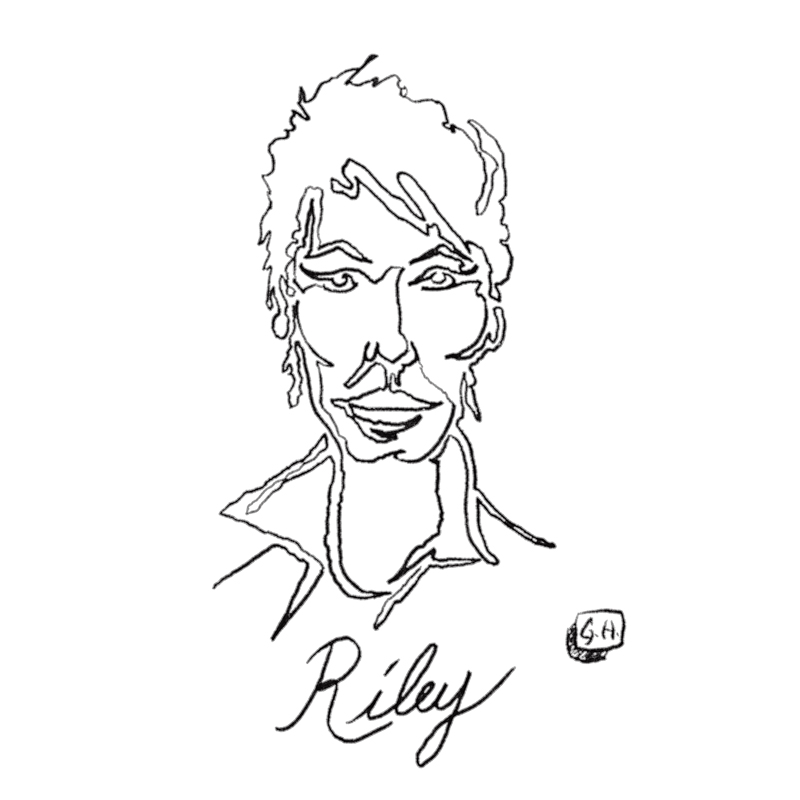
Riley James

Riley James  b. 1985 Boston, MA

For a man with the widespread reputation as a happy-go-lucky stoner, the Boston singer-songwriter Riley James poignantly distilled the dark heart of humanity down to a few verses and choruses with impressive consistency. This hard-living, well-travelled artist penned some of the saddest songs known to North America, ones that were never quite ‘straight’ enough for mass appeal. Music business insiders however, at least those canny enough to recognize a kindred Kurtzian spirit, were simply entranced. Now, nobody claimed that James’s vocal style was technically perfect, but the fuzzy, warm growl he called singing was distinctive and he had a way of hitting the low notes that caused women to swoon and men to get angry.                                                  

A natural aversion to business dealings, typical of his kind really, worked strategically early in James’s career when he was consciously cultivating the ‘outsider’ image of an artist who wouldn’t be bought and sold like so many mocaccinos. Unfortunately, the result was that, for most of his recording career, despite a thoroughly honorable discography, Riley James didn’t have a hell of a lot to show financially for all his trouble. His irresponsibility had become a tiresome tic and he was unwelcome even in the offices of his final record label/microbrewery*.

Let’s back up a few years. Riley James’s eponymous self-produced début was good enough to attract the attention of major label publishers. Riley James featured short, sharp verses of hard-won pop wisdom in between jabbing choruses that left the listener wanting more. It seemed to come easy for him. The music press quickly fell in line, in the way they had years previously for Austin guitar-slinger Charlie Sexton, with whom James also shared a physical resemblance, insofar as they were both pretty, high-cheekboned, and full-lipped enough to be mistaken, at a distance, for women. 

Expectations were high then for the sophomore album, Heathens & Heartbreakers. With a freshly inked publishing deal courtesy EMI Los Angeles (overseen by talent buyer Dean Frazier and VP Allen Barnett, who had started his career at ASCAP and wound up working for ‘the man’ just three years out of college), James swaggered into the studio swinging three solid AAA radio contenders. Even some of the ‘filler’ tracks represented serious possibilities for film and TV placement. 

In order to reap greater benefits from what they thought was a sure-fire hit record, James and his manager Angie Bradshaw started their own label, also called Heathens & Heartbreakers, which they hoped would be distributed via CBS. This arrangement, minor league record company backed up by a major label publishing company, was practical and had provided many breakout artists with an avenue to success previously. But in the curious case of Riley James, it did not work and it remains a mystery as to why no-one could figure out how to put more than 50 people in room with James west of St. Louis, even as his third and fourth albums (Let It Slide and Happy Ain’t the Word), both critically lauded, stiffed.

Part of the blame, or perhaps all of it, must rest with Riley James himself. A good-looking boy, he had the motive and the opportunity and, put crudely, would simply not stop fucking anything that moved.  This included his manager, and quite a few of her friends, with predictable complications and communication breakdowns. On the road, nights of oblivion and wanton sex caused no end of problems at a personal level (not to mention serial bouts of venereal disease), but ended up biting his career on the ass rather more seriously after an episode in Minneapolis when Riley hooked-up with the girlfriend of a regional AAA radio program director. Within days, sparked by the machinations of the cuckolded Twin Cities PD, a negative chain reaction among radio programmers up and down the Mississippi led to his fifth album, Dust In My Eyes, being all but removed from the Americana charts. This was particularly regrettable as Dust had recently been gathering momentum on the back of its strong title track (“Watchin’ you walk away/A part of me dies/No, I’m not cryin’/That’s just dust in my eyes”).

New managers came and went. On paper, it should have worked every time: Great albums, great production, unique sounds, chances taken with lyrics, and melodic surprises galore. Such was the regard for his musical gift, James never had trouble gathering a band or an engineer to make his mostly self-produced Lps. Yes, there were a few obvious musical allusions to past masters and the odd Beatles swipe, but who doesn’t steal the best from time to time (as James was fond of saying, “Like [The Beatles] never ripped anybody off.”)?

Despite the quality on offer, record sales were never a strong revenue stream. Nonetheless, Riley James managed to maintain deep pockets of dedicated fans. Boston and the Eastern Seaboard were basically in the bag, although he certainly didn’t help his cause by getting booted off an important Americana show in DC syndicated by NPR following an extremely hyper-active live broadcast. The show’s host, a devout Christian, convinced that James was coked up, sought to confront the singer backstage only to find him in flagrante delicto with a wily and willing female fan who had snuck in to the green room. Summarily dismissed, he waddled off the premises with his jeans around his ankles; it was both comical and pathetic. Word got around and James found himself temporarily banned from NPR nationwide.

It just wasn’t the same world out there for Riley James as it was for others. He was a man on a mission, and that mission was to get in trouble.  

Once he moved to Nashville, where he had lived after following a pretty Three Faces Media intern there in 2016, his libidinous behavior only grew more depraved. For Riley, Nashville at this time was basically a pick ‘n’ mix orgy with a new crop of willing, experimental youngsters of every kind conveniently moving into town every day. 

In interviews, he would smirk, but was sensible enough to be coy about his reputation; even so, he began attending 12-Step SLA (Sex & Love Addiction) meetings in an attempt to address the problem which had recently come to a particularly sordid head. James had been arrested during a sting operation at a swinger’s club that gathered in a duplex near Cinderella Studios, north of the Briley Parkway in Madison, Tennessee. In order to buy the duplex, the swinger’s club’s operators, Madison Lifestyle Hunters, had registered the property as “commercial,” which gave the district attorney a window in order to prosecute. It was a minor bust, and Riley James featured once again in The Tennessean; this time it wasn’t for a new album or selling out the Mercy Lounge, but for “illicit and immoral behavior performed in a public space.” Sometimes bad publicity is just bad publicity and with a seedy miasma now permanently cloaked around him, managers begun to give James a wide berth.

He started a final album using Pledge Music to raise the money for production. This time he decided to work with a producer and hired Jimmy “The Sandman” Rizzo who’d had some luck recently with a Gospel/Americana compilation called The Circle Remains Unbroken (Conscious Music, 2018). Rounder Records itself was interested in distributing the record, tentatively titled The Monster Under the Bed (Of the American Dream), but James had shtupped two of its reps five years previously (and left both under bad circumstances) and so once again scuppered the deal.  

With his Pledge campaign, Riley James was careful not to over-extend himself, but decided to go a unique route and offer what he jokingly called “singing telegrams” for $250 a piece to those superfans who could afford it. The way it should have worked out was this: superfan (or husband/wife/partner of superfan) pledges $250 to Riley James’ new album, and when James was nearby for a show, he would schedule a time to show up at their house or office to sing a pre-determined song.

It was a great idea, but on the very first telegram delivery, just outside of Indianapolis, James showed up to sing his song “Lay It On Me” to a pledger’s wife and, caught up in the frisson of a virtually made-for-porn set-up, ended up attempting a quickie in the foyer of the family home. As if on cue, the husband showed up with their two young children, and pretty much witnessed the entire event, or at least its shuddering, sticky conclusion. Pledge Music, citing a morality clause in their contract, immediately broke off ties with James (and, of course, kept all of his money).

*The golden era of record-company-turned-adjunct-to-small-service-industry-oriented-business lasted a relatively short time (roughly 2012 to 2020). The likes of coffee bean roasteries and hemp clothing retailers, et al. soon found out they were dealing with a level of unpredictability and wilfulness greater than anything previously encountered. Returning to the normal shit storms associated with business (late orders, unsatisfied customers, sexually hostile work environments, etc.), they very quickly put behind them such ridiculous concepts as “SoundScan sheets”, “buzz clips”, and “artistic integrity”.

Categories
Solo Singer-Songwriters

Conrad Albee

Conrad Albee (b. 1996, Statesboro, NC)

After blazing an unremarkable two-year trail as back-up guitar tech and weed procurer for Archers Of Loaf, Conrad Albee plopped into the thriving Americana scene with a self-released CD-R in early 2013. Garnering no little interest from gullible indie labels south of the Mason-Dixon line still looking for ‘the next R.E.M.’ after 30+ years of fruitless effort, Albee’s Born On Interstate 40 actually contained two worthwhile songs, “Between The Mountains & The Moon” and “Down On The Piedmont”. The rest of the disc was a clever mixture, lyrically and musically, of early-period Ryan Adams and late-period Ryan Adams, with some mid-period Ryan Adams thrown in to keep it fresh.

The more kindly music writers called Albee’s craft “somewhat familiar” and “perhaps over-familiar”, while others went with “not gonna lie, really fucking familiar.” But Albee made no bones or apologies about it, almost gleefully admitting to having copped everything he could from a certain Jacksonville, NC singer/songwriter.  “At least I didn’t rip-off Bryan Adams!” he would joke onstage at literally every gig he played, which never got old. Not a bit.

An obvious, clickbait-y Kickstarter campaign employing copyrighted Getty Images photos of old sunburst Gibson guitars and down-home, sepia-toned rural scenes cut-and-pasted from other crowdfunded projects (plus a clear bump from the surreptitious and unauthorized use of Archers of Loaf’s mailing list) somehow managed to net Albee nearly $60k. Like bees to honey or, indeed, flies to shit, Albee’s windfall attracted a teeming, greedy array of low-rent Nashville publicists, song pitchers, and publishers who all came for a sniff of the soon-to-be-forgotten singer’s money. Alas, this is an unfortunate, but all-too-common scenario in the music business of modern times. And past times.

Extravagantly praised by Whiskeytowncrier.com’s lone music critic Chris Reed as “sonically uninteresting and highly derivative”, the re-recorded, re-released Born (Again) On Interstate 40 (Kudzu Records) was but one of a remarkable thousands-strong glut of Americana releases that came out in 2014. Unfortunately for Albee, major retail chain See De’ Baby refused to carry it until a plagiarism lawsuit brought by Ryan Adams was settled. Adams dropped the court case in fairly short order when it was revealed that not one Interstate 40 cd had been sold, but defending the case wiped out the last of Albee’s remaining Kickstarter bonanza. The album was never released on vinyl, nor will it.

A scant two years after his record came out, Conrad Albee moved back to Statesboro and, oblivious to the heavy hand of irony, took an assistant manager’s job at his father’s Kinko’s franchise, finally earning money by making copies for a living.

And he still listens to Ryan Adams, you know, despite everything.

Categories
Solo Singer-Songwriters

Francis McCombe

Francis McCombe  (b. 1991 Raleigh, NC; d. 2017 Nashville, TN)

Perhaps her parents’ literary joke was just too tempting for the Fates, but in christening their daughter Francis, thereby making her full name a near homophone of the title character in a particularly tragic Ernest Hemingway short story, they effectively cursed her short, unhappy life. Nonetheless, Francis McCombe’s music remains ripe for discovery by the greater public, but not before her gossamer legacy, a trove of rough demos, has been sifted through, thoroughly re-mixed, and tenderly edited.

Her parents, Glenn and Marta McCombe, were both Anthropology professors at North Carolina State, who also happened to be folk musicians with a penchant for over-indulgence in whiskey and marijuana. They sang Bolivian Folk Songs to her while she was in the crib.  “Puedes Ser Qualquier Cosa” (You Can Be Anything), an inspirational tune about a coffee farmer who longed for life as a sailor even though he lived in a land locked country, was a particular favorite. Much later she would sing it in public, at parties or guitar pulls, giving her an air of international intrigue, even thought she had never been father south than Tallahassee.

At least initially, there was a lot of fun around the McCombe’s house, but also, perhaps not coincidentally, a lot of alcoholism. Glenn and Marta hot-housed Francis with what they assumed was a well-rounded education, but in reality left her under-socialized and over-medicated. Her folks split up when she was seventeen, amid bitter recriminations and mutual allegations of domestic violence and substance abuse.  In the divorce settlement, McCombe somehow ended up with her father’s precious 1962 Gibson Hummingbird. She named the guitar ‘Emmylou’ and in all the desperate, tragic times that followed, Francis never allowed anything to come between her and Emmylou; alas, the guitar represented the only part of herself she allowed herself to treasure. And so Emmylou was always polished, always set up properly, always in tune, always kept safe in its hard shell case, and, remarkably, never pawned.

She attended North Carolina State shortly after but soon dropped out, the pull of Nashville, a geographical magnet for the budding musician. McCombe worked a job at Five Points Pizza for a season and did a stint as a bartender Robert’s Western World. She soon took to spiralling in and out of doomed relationships, and then, as she followed her parents footpath, in an out of rehab. She simply could not stay sober, however dire her circumstances became, wracking up two DUIs in one year. Eventually, Musicares refused to offer her a bed at one of the dozen or so clinics within a few hours of Nashville and she resorted to couch surfing. Despite her obvious talent, club owners barred McCombe from their tribute nights on account of her habit of draining all the bottles backstage. She lived like a lost cause.

Francis McCombe had the terrible misfortune to grow up beautiful. Her long, lank dirty blond hair, sun bleached freckles, and eccentric thrift store fashion choices caught the eyes of the men and women all across town. Married to this tragic beauty was a sharp tongue and a contagious laugh (nearly masking her smoker’s cough) that drew in just the wrong sort of co-dependent type looking for someone to ‘complete’ them. Many an East Side musician considered that maybe, just maybe, he was the one who had what it took to capture her and her songs, to arrest her untamed spirit. This proved impossible. Her sad and lonesome eyes entranced dozens, but they all abandoned her. Time spent with Francis McCombe was nothing to write home about, even as it was something to write a song about.   

In fact, the “Carolina Cobra” (a nickname she earned on account of her ability to wrap her lips around a full can of beer, kick her head back, and proceed to empty it in one go) was a prepossessing songwriter, especially considering her tender age, with a knack for lyrical inventiveness and memorable choruses.  However, she often struggled to resolve a story line, so for all their insight and emotion, many remain more impressionistic, narcotic snapshots of relationships than fully realized songs. She was certainly able to bend a few ears at local open mic nights and ‘In The Rounds’ around town. However, McCombe spine curled when it came to ambition, direction, or gumption.

After numerous false starts with countless “producers”, i.e. fellow struggling singer-songwriters with semi-professional rigs in their cramped East Nashville apartments, McCombe had amassed dozens of recordings on a variety of formats (analogue tape, Pro-Tools, Logic, Radar, Garageband, iPhone voice messages—so many thumb drives in her purse) in various stages of completion. Though only a few of her recordings were blessed with truly finished vocals, and several feature scratch takes replete with sheepish apologies and audio verité groans and sighs, it would take a hard-hearted critic to deny that these demos captured something special, however inchoate. Unfortunately, McCombe would usually chain smoke marijuana during her recording sessions, making it difficult for her to retain focus and trying the patience of both musicians and engineers. By the end, she simply exhausted, in one way and another, each of the benefactors who attempted to help her assemble an album in some form.

A chance encounter with the locally infamous Americana scenester Junebug Jonez, who was deep into a warm and merciless heroin abyss, left her strung out within weeks. He also got her pregnant. Unable to get clean herself and sensing that an end was near, Francis set to rescuing as many fellow addicts as she could, lecturing them, pleading with them, citing herself as an example, and even, at great personal peril, flushing one dealer’s considerable stash down the toilet. At least three users credit McCombe with saving their lives. Less than a month after walking out of yet another rehabilitation facility, Francis took herself out of the game by doing two “Gram Bongs” (a shot of tequila followed by an arm full of morphine) within a 12-hour period. That she was now a member of the ’27 Club’ became a talking point, and no one was certain if her death was intentional or not.

For a short time after she died, a few of her local devotees would attempt to sing “Dark Alleys,” McCombe’s most popular song and the only one released in her lifetime*. Performing it around backyard campfires and living rooms, the opening line, “Bang me big hammer like it’s the first day of the war,” always provoked nervous laughter among those gathered.

Her mother, with whom she had remained close throughout all the ups and mostly downs, had her body cremated and scattered over a beach outside Cape Fear, a favorite place from childhood.  

*On the NPR compilation album Folkscene (2015); it actually received a few spins on WMOT, garnering a small cult of admirers.